

Slovenia is a trendy small country in central Europe that has a lot to offer to visitors from all over the world. From mountains to beach escapes, quaint little towns, and countryside adventures, Slovenia should be on your bucket list if you seek all this and more.
🧭 Top Tours in Slovenia:
- Slovenia in One Day: Lake Bled, Postojna Cave, and Predjama Castle
- Panoramic Tour to Piran with Sweet Surprise
- Truffles: Hunting, Cooking, and Tasting Experience
🛏️ Exceptional Hotels in the Region:
- Hotel Grad Otočec (A luxury castle hotel)
- Benecanka Casa Veneziana Piran (Rooms in Piran with sea view)
- Hotel Heritage (Top hotel option in Ljubljana)
🍲 Our Food Recommendations: Kremna Rezina (Bled Cream Cake), Kranjska Klobasa (Krainer Sausage), Štruklji (Rolled Dumplings).
🚗 We suggest that you rent a car at the airport in Ljubljana and drive around the countryside to get the most out of your trip to the area.

Brief Slovenia Travel Know-How
Slovenia is located in Europe. It's bordering Austria to the north, Hungary to the east, Croatia to the South, and Italy to the West.
It's part of the European Union and a Schengen member state. The euro is the official legal tender, which simplifies travel greatly in the region.

The locals speak Slovenian; a few understand German, but most people understand and speak English in the cities. English proficiency is less common in the countryside and among elders.
Slovenians are nice, friendly, helpful people, and once you get to know them, they will treat you like great friends. They are slightly distant at first, but they warm up quickly.
Food and drink, accommodation, and attraction prices are somewhat comparable to neighboring Austria and Croatia.

Slovenian food specialties are sausages and dumplings, but I'm not an expert in Slovenian food. If you want to know more, I recommend this Slovenian Food Guide from Shireen.
To get around Slovenia, I recommend hiring a rental car or motorbike with a highway sticker. That way you can get around with advanced mobility options to access lesser known spots.
Ljubljana

A visit to Slovenia is incomplete if you haven't visited the capital of the country. Plan at least 1-2 days in Ljubljana to make the most of your trip!
Ljubljana is known for the old town quarters, the castle hill, its green soul, clean neighborhoods, tasty local food, and upbeat vibe.
The city isn't all that large, which we absolutely loved, as it's walkable and every corner is picture-perfect. You won't feel all that overwhelmed running from one attraction to the other in Ljubljana, which is rather refreshing!

Evenings are bustling, but the atmosphere during the peak season in the old town is pleasant, with stylish food and drink establishments providing diverse entertainment options such as outdoor live music sessions.
Access to the city is straightforward as well, with safe underground parking options near the city center, and the main railway station is just a 15-minute walk away from the downtown area.
My recommendation: Ljubljana is your city if you just want to take a relaxed city break with your better half.
Lake Bled

The most well-known lake (and attraction) in Slovenia is, undoubtedly, Lake Bled.
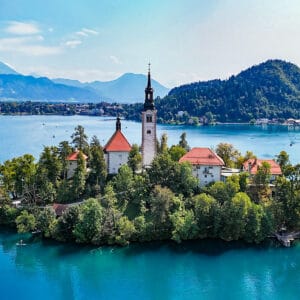
Located just north of the capital, Ljubljana, Lake Bled offers a timeless view with a church on an island and a castle rock background.
Crystal clear waters invite visitors for a bath at one of the beaches along the small lake. You can hire a boat or paddle surf boat too to get to the island to visit the church.

I recommend a scenic walk around the lake, which takes about 1 ½ to 2 hours. You'll be able to capture the lake from its best angles that way while enjoying the stunning landscape.
Just keep in mind that the lake is very popular among visitors in the summer months. Plan ahead and avoid driving around, because the streets are narrow and parking is expensive and difficult to come by.
Tip: Lake Bled FAQs to help you plan a trip.
Caves

In Slovenia, you get a chance to visit some of the largest and most spectacular caves in Europe with underground canyons, stalactites, stalagmites, and underground rivers.
The most famous and most frequented caves are the ones in the west of the country, Postojna and Skocjan.
You have to join a guided tour to access the caves, which takes you through the caves by foot, and in the case of Postojna, it includes a trackless train ride.
Postojna is more famous, and the tour takes about 2 hours in total. A tour in Skocjan is completed after about 1 ½ hours.
Both are very popular and busy during the main tourist season, but they are accessible all year round (except 25th December and 1st January).
During the peak season, purchase your tickets online to avoid waiting in the queue too long. If you purchase it at the ticket counter, you may have to wait 60-90 minutes.
Tip: Photography is limited in the caves, flash is forbidden. Bring along a light jacket, as it can get chilly in the caves.
Predjama Castle

Predjama Castle is built directly into a 400-foot-high cliff, making it one of the most dramatic castles in Europe.
The castle dates back over 800 years, with the earliest records from the 13th century. It's famously connected to a vast network of caves beneath it which also served as secret escape routes and storerooms.
Every July a medieval tournament is held in front of the castle, reenacting knights duels, jousts, and medieval life.
The castle is just about 15 minutes away from the Postojna Caves, and you can acquire combo tickets for both sights. A shuttle service is also in place.
Ptuj City and Castle

Surprisingly, Ptuj is the oldest city in Slovenia and counts as one of the first major settlements in Europe.
The city was occupied by the Romans for over 2000 years, and at its peak, the population counted over 40000 inhabitants. A Mithras temple shrine is all that's left of the Romans now in Ptuj.
During the Dark Ages and the medieval period, the city declined drastically in the size of the population.

A castle was erected on the castle hill, which then served as a ruling ground for the Salzburg Archbishop and later the Austrian Habsburg monarchy.
We discovered Ptuj accidentally as we were road-tripping the eastern parts of Slovenia.
The town, with its mud-red roofs and pastel-colored house walls, is charming and not that well-known (yet!) among international tourists.
A thermal spa and wineries offering their white wine specialties can turn Ptuj into a wellness gourmet weekend trip.
Maribor

Maribor is located in the wine region, and it's a quaint city full of history and beauty. You will enjoy a stroll through this town if you are looking for a lesser known day trip from the capital, Ljubljana.
The oldest vine in the world still producing fruit is growing in Maribor. It's listed in the Guinness book as a 400-year-old vine plant.
Our insider tip: a visit to the precious university gardens of Maribor. The vast area is probably one of the largest outdoor botanical gardens that we have encountered so far in Europe.
Here, flower and tree fans, will find a large variety of intricately documented plant species from the region.
Piran

Piran is an ancient city on the shores of the Istrian Mediterranean Sea. Various conquests under the Byzantine, Frankish, Venetian, and Austrian empires made this city very prosperous.
Each left a visible mark on the port town, but the Venetian architecture out trumped them all. Small alleyways help you explore the inner heart of this Venice-look-alike old town.
Head to the fortified walls for an unforgettable view of the Mediterranean Sea, take a break in the old town and try some local fish and squid delicacies, or plan a day at the beach and soak up the sun.
Tip: Plan a visit to the salt pans of Piran.
Melania's Hometown
The former first lady and model Melania Trump was born in Sevnica, in southern Slovenia.
An artist was commissioned to build a statue in her honor, but the wood statue was burned down.
So, they rebuilt it but in bronze, and for a while people were visiting this otherwise forgotten corner of Slovenia. But the statue has gone missing recently, and the police investigation is going on.
So I'm not sure if it's worth a visit at this point (they might fix it again), but perhaps it's right up your alley.
The town counts as one of the oldest settlements in Slovenia. There is a castle nearby as well, and it's a serene, quiet corner in Slovenia.
Žiče Charterhouse Monastery
Žiče is a medieval monastery of the Carthusian order. These were monks who valued the written word and languages more than anything else.
The place is a partial ruin, it's being continuously renovated. It's a magical place with a Camelot vibe.
They organize special events and reenactments there during the summer months, and this place is a must if you want to immerse yourself in the history of the area.
Add this place in Slovenia to your itinerary if you are looking for an off-the-beaten-path destination.
Mountains
The north of the country, bordering Austria and Italy, is known for some of the best mountain resorts in Europe.
The Alps are separated into three main parts: the Julian Alps, also known as the Venetian Alps, near Italy; the Kamnik-Savinja Alps; and the Karavanke Alps to the north, bordering neighboring Austrian Carinthia.
Plan a hiking tour and set out for one of the stunning waterfalls in the region. Look up Pericnik, Kozjak, Virje, Rinka, and Iglica, just to name a few. (Slap means waterfall in Slovenian.)
Our insider tip: Velika Planina is one of the most authentic places in the Slovenian Alps. It's a day trip from Ljubljana.


Comments
No Comments