

Villages, Towns, and Cities are all settlements, yet each has a different meaning around the world.
I talk about the defining factors and the historical relevance of each term today.

Jump to:
TL;DR
I always thought that the terms village, town, and city could be confusing.
We had some discussion at home about the differentiations, and we compared them across borders.
That said, every region seems to have a different interpretation and many are tied to historical rules and regulations.
For example, in Central Europe, they implemented the German town law, which set the benchmark for every village, city, and town in the region.
This law was most likely derived from the Italians, which in turn came from the Romans, who ruled most of Europe, northern Africa and the Levant.
Nonetheless, there is a universal consensus on the distinctive characteristics of settlement types across the world.
A village is a small settlement, a city the administrative regional seat and a town is something in between.

Village
A small settlement is called a village. This seems to be indisputably true all over the world.
It's the smallest of the three terms, and most probably also the most common human settlement in the world.
Village life is simple, everyone knows everybody and villages have tight-knit communities.
A village can have 300 souls or 10.000, there is no set rule. It all depends on the legal framework of each country.
Countries can choose to elevate a village to a township if the village grows.

Town
The concept of a town theoretically emerged during the medieval ages in Europe.
A settlement larger than a village but smaller than a city would receive the right to hold a market. Therefore, these towns were known as market towns.
In French, they are also called a Bourg, in Italian Cittadina, Villa in Spanish, Vila in Portuguese and Marktgemeinde in German.
Market towns are the transition between a village and a city.
The term, market town, is still used today across Europe, and it can be reflected in town names. I.e. Markt Neubeuern (Germany).


A market town in Austria and Bavaria, for example, has different privileges under the town law. That can mean in some areas a cut in government taxes, compared to the much higher taxes that cities have to pay to the state.
Back in the day, market towns were allowed to hold markets on the town square, which in turn brought in money.
A town can always be elevated to the status of a city if the population grows or downgraded to the rank of a village.
Some market towns in Europe include:
- Cirencester, UK.
- Newport, Shropshire, UK.
- Garmisch-Partenkirchen, Germany
- Murnau am Staffelsee, Germany
- Esslingen am Necker, Germany.
- St.Johann in Tirol, Austria.
- Lana, South Tyrol, Italy.
- Skjern, Denmark.
- Rio de Mouro, Portugal.


Yet, the definition of what makes a town, a town, and town laws in general, can vary a lot between countries across Europe and the world.
Adding to the confusion, people across the world in this age use the term “town” to describe a village or city. This trend is most commonly observed in America and other English-speaking countries.
City
The definition of a city is perhaps more uniformly clear-cut in most countries, and the world.
Most cities have a large population and a city hall, a busy center that rules over a region or area, as the main center of power.
Walled fortified settlement were called cities during the medieval era in Europe and Asia.

This includes cities and former cities such as Beijing in China, Ayutthaya in Thailand, Dubrovnik in Croatia and Rothenburg ob der Tauber in Germany, to just name a few.
Ironically, you will also come across some places that are called cities, but appear to be villages.
Two come to my mind right now, and each of them are in Austria.
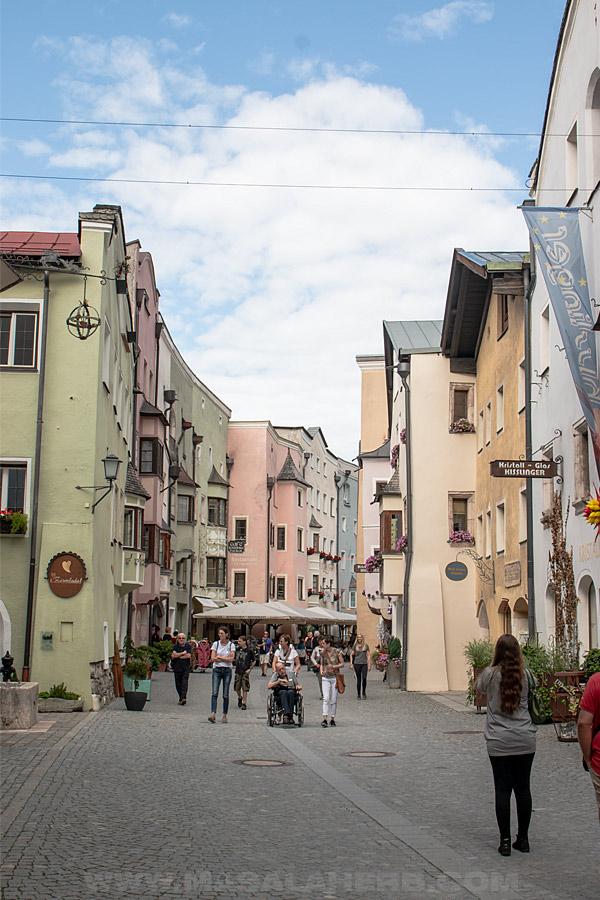

The city of Rattenberg, with a population of 400, and the city of Rust in Burgenland, with a population of 1800, are called cities because at some point in history they received the title, and they stuck to that. The two are known as some of the smallest cities in the world.
Add to that the Vatican and San Marino, which are both city states surrounded by Italy. That means they are micronations and a city at the same time.


Comments
No Comments