

Christmas markets are filled with amazing gift ideas and souvenirs.
Especially Christmas markets in Germany and Austria, are a treasure trove of handcrafted items where you will find high-quality things to buy.

TL;DR
I help you discover the best things to buy in a German-speaking market. Handmade traditional regional things and quality items that are actually useful or original are the prime focus of this guide.
This Christmas market gift guide is applicable to Germany, Austria, Liechtenstein, Switzerland, and South Tyrol in Northern Italy.
Some of these items can also be found in other neighboring areas and cities, such as Alsace (region in France), Bratislava (capital of Slovakia), Budapest (Hungary), Prague (Czech Republic), and Ljubljana (Slovenia).


Winter Drinks
Winter drinks, such as mulled wines and other spiked hot drinks, are a prominent sight at every Christmas market in Central Europe.
The drinks are served hot, and they will warm you up, also because they are spiked with a spirit or two, such as rum, wine, vodka, or whiskey.
Note that most mulled wines are priced at 5 euros a mug, and the deposit for the cup is usually extra. Bring back the cup, and you will get back your deposit. They don't serve plastic and paper cups anymore at Christmas markets in Europe.
By the way, these mugs can be purchased, or you can just keep the mug after drinking your mulled wine because you paid a deposit on it.

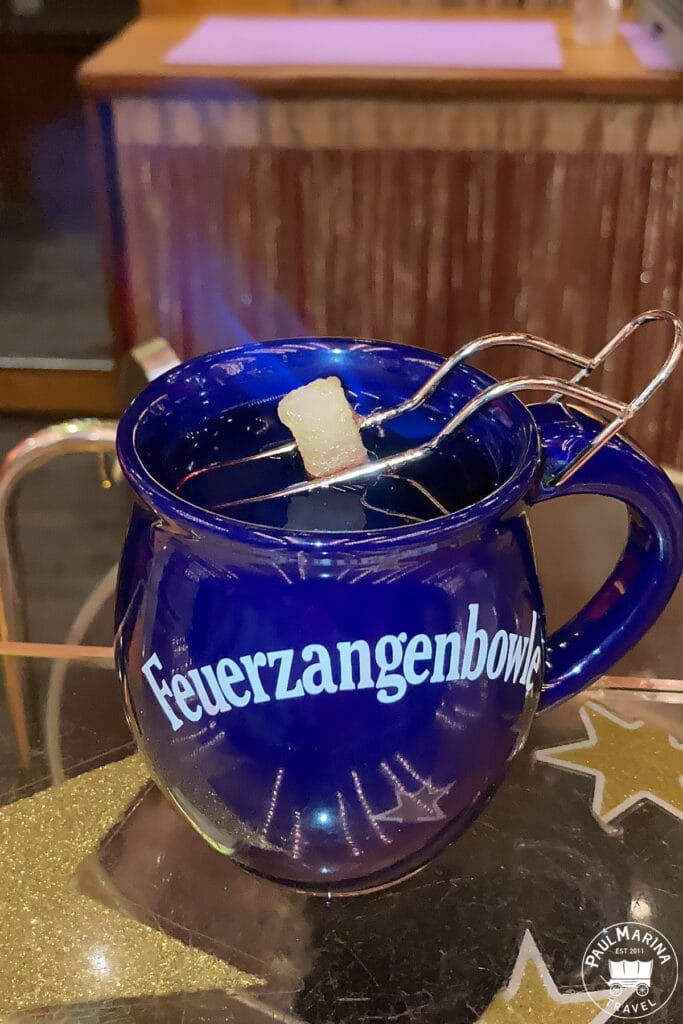
You will come across various alcoholic drinks:
- Glühwein — Hot spiced mulled wine. The traditional Glühwein recipe is made with red wine, although you might come across variations such as white wine Glühwein and rosé Glühwein. Crazy-flavored creative Glühwein is another fun trend.
- Punsch — This drink is served hot in Germany and Austria, and it is made of tea, a liquor, fruit juice, and spices. A children's version prepared without alcohol is common as well, which is called Kinderpunsch or, as seen in the picture below, Autofahrerpunsch (car driver's Punsch)
- Jagertee — Actually an Après ski drink, commonly served in alpine huts, the Jagertee has its place at Christmas markets in the mountains in Austria. It's a combination of red wine, schnapps, rum, tea, orange, and spices. This one is sure to give you a warm kick!
Some non-alcoholic hot drink choices include hot chocolate, Kinderpunsch and herbal teas.
Read More: The trendiest Christmas market drinks to try this season!

Christmas Tree Ornaments
Christmas tree ornaments have a long tradition in Germany and Austria.
Some specific regions are known for producing gorgeous hand-blown glass baubles and other glass ornaments. You will come across the last standing artisanal sellers from these specific regions and towns with their small stalls.
Look out for glass Christmas tree ornaments from Rattenberg Tyrol and Lauscha, Thüringen, as well as for hand-painted baubles and stars handcrafted from other materials such as metal and wood.
You will also find the most beautiful Christmas tree toppers in these German Christmas markets.
I highly recommend asking the sellers for the origin of their products because many glass ornaments in the commercial realm have the tendency to originate from mass-produced factories. The baubles and decorations that you want, should be handmade to a certain extent to make it worth your money.
Tip: The same stall sellers tend to also have candle holders and edible Christmas ornaments in stock.


Wax Candles
You might not know that, but quality wax candles are a commodity in the 21st century!
Cheap-produced candles emitting harmful fumes with wonky candle wicks are the norm, but what if I told you that there is a whole world of amazing candles to be discovered.
You can get vegan candles made without stearin, candles made without paraffin, odorless candles, candles in all colors, and beeswax candles.
Most sellers are also the artisans of the products sold, so you get to chat with them, and they like to explain the differences, pros, and cons of their products.


Handcarved Crib Figurines
There is a long wood carving tradition in the Austrian, German, and North Italian Alps. There are entire villages, such as Oberammergau in Bavaria, and Strobl in Austria, that have dedicated themselves to the art of carving out wooden crib figurines.
Intricate details and fineness are their key traits, and you will hardly find a better choice of figurines anywhere else.
Christmas markets are the best time to stock up on wooden Baby Jesuses and angels!
Besides, these sellers come from small villages tucked away in some faraway valley, and at a Christmas market in a larger city, you get a chance to discover their art works.

Sweet Stuff
To take back home or to snack at the Christmas market, cookies, and nuts are part of the core offering of every Christkindlmarkt, and these are the best Christmas market foods that you can get.
In the nut section, you can purchase:
- Roasted almonds — A delicacy from Germany. These are coated in a sugar and egg base. You get the original plain flavored ones and other funky flavors such as chili or caramel roasted almonds. The best offerings can be found at the Munich Christmas market.
- Maroni — Steamed or roasted chestnuts. You also get Kastanien, which pretty much tastes the same. They are served hot, and the texture resembles chickpeas or green peas.
- Candied or seasoned walnuts — These are not all that common, but you will see them offered at larger Christmas market stalls in Germany.

Christmas cookies originated in Germany and Austria, and Christmas markets sell the best quality and choice of holiday cookies.
The best, must-try cookies from the region include:
- Lebkuchen — The German version of Gingerbread. Aim for the Nuremberg Lebkuchen (aka Elisenlebkuchen). The best are found only at the Wicklein stall at the Hauptmarkt Christmas market in Nuremberg, Germany. You can also get Lebkuchen which resemble Gingerbread or Lebkuchen houses.
- Cinnamon Star Cookies (Zimtsterne) — German cookies, made with almonds and cinnamon.
- Linzeraugen — Austrian jam filled double-decker cookies that melt in the mouth.
- Vanillekipferl — Vanilla flavored crescent shaped cookies in memory of the Turkish occupation of Vienna, Austria.

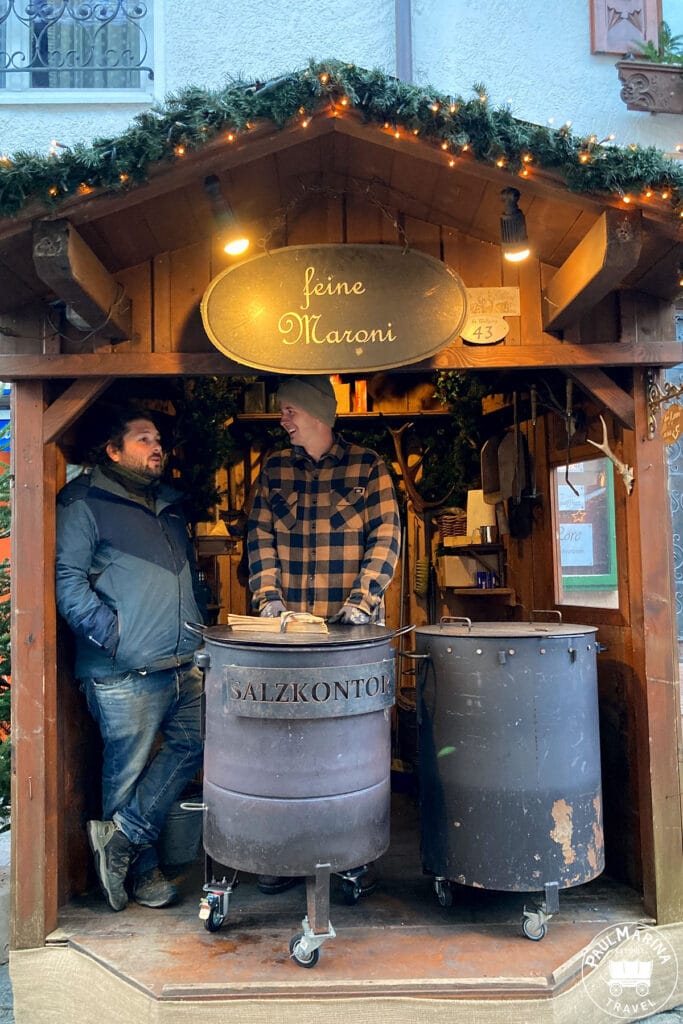
I can also recommend baked Christstollen cake from Saxony in Germany or Kletzenbrot (aka Zeltenbrot) from the two Tyrol regions in Austria and Italy.
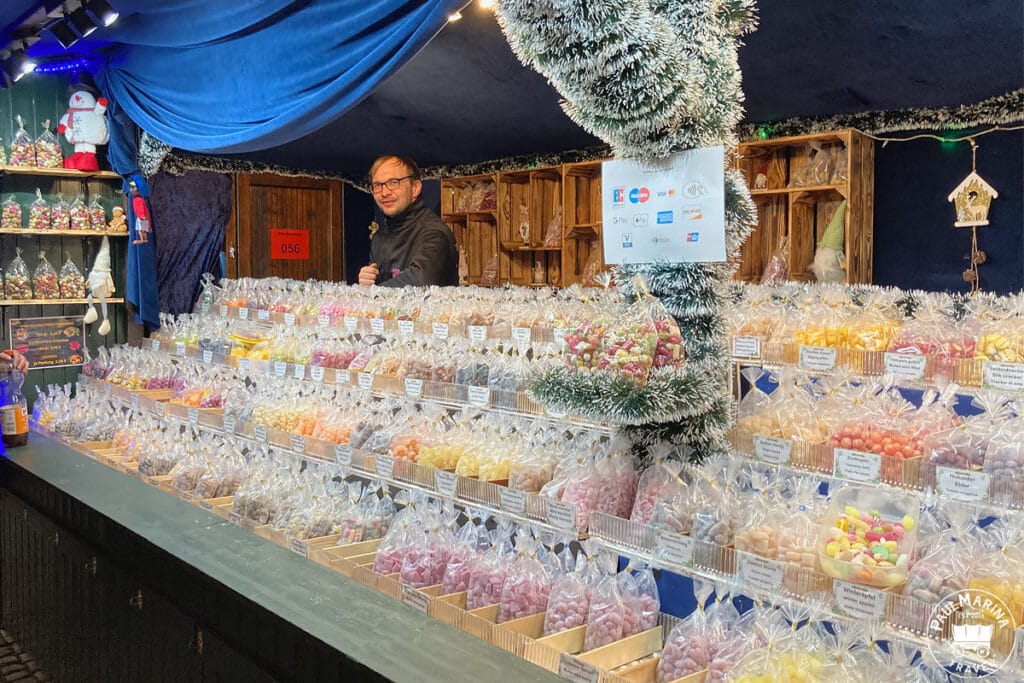
Hard candy, such as caramel candy, is also commonly sold at Christmas markets, as well as chocolates and dried fruits. Here again, Nuremberg in Germany has traditionally had the best choices of dried fruits, all thanks to their diverse history.
Paper Products
From handmade paper to hand-bound hardcover books and creative cards to gift to your loved ones, you will encounter paper themed stalls in all Christmas markets.
Look out for unusual designs and local artists, as well as for quality and usability, especially for cards with words in your language.

Alpine Sheep Wool and Knitted Products
Sheep wool has a very long tradition in the alpine regions.
Back in the day, wool would be hand sheared in the hotter months, and the wool was spun on a wheel during the colder winter months in the parlor. If it were rough wool, it would be turned into felt. Nothing would go to waste!
The skilled women would knit socks, pullovers, and more. Today they still do that, but they also added some creative elements to the mix, such as amigurumi.
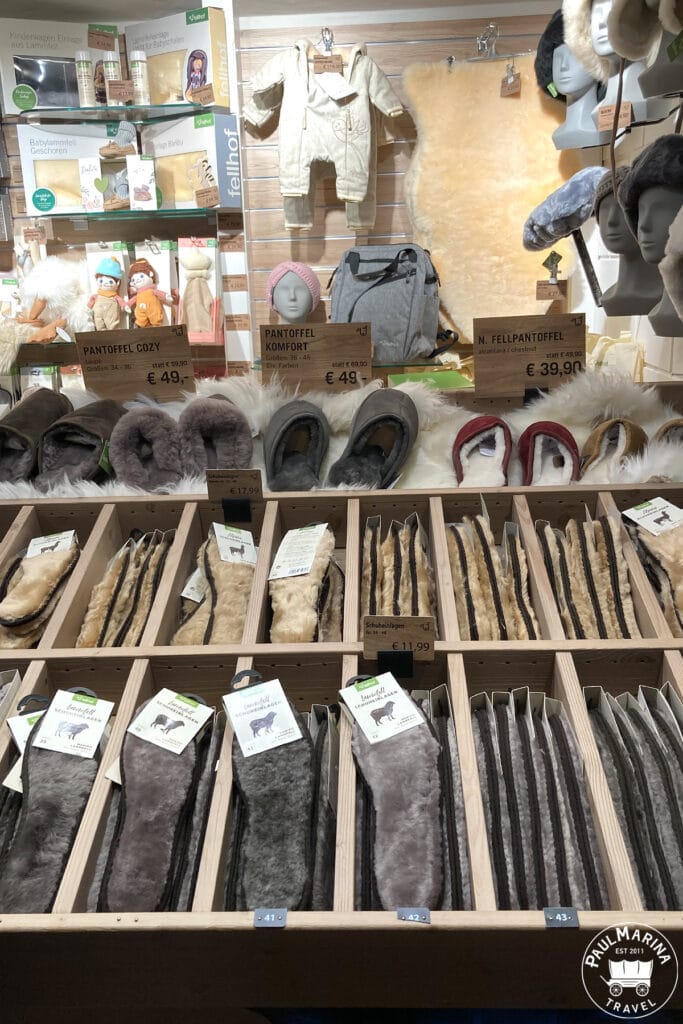
I recommend buying handmade woolen socks; they will keep you forever warm in your cold home. They also make socks with a leather sole, which serve as flexible house slippers.
Felt slippers are another specialty in Austria. Felt is colored and prepared with soap and then shaped into useful things such as slippers or hats. They keep you warm, and they are unique.

Handmade Ceramic
My wife's favorite stalls are the ceramic stalls at Christmas markets. She loves getting unique ceramics and pottery from craftsmen for Masala Herb.
Some special native things to pick up here include a butter box, small milk jugs, and unusual cup sizes.
Most stalls are independent artisans from the region with their work on display.

Honey, Jam, and Condiments
Honey has always had a great importance in the German culture, and traditional beekeepers are still very much a thing in Europe.
Honey specialties such as forest honey or honey from a specific flower, such as acacia, are the highlight here.
These regions also make fantastic condiments such as sweet and pungent mustard with horseradish or lingonberry jam.

Wooden Items
The art of working with wood is deeply rooted in Germany and Austria. In the regional Christmas markets you will find incredible wooden items.
Hand-carved wooden deco pieces and kitchen items such as cutting boards and wooden spoons can be purchased for a great price.
The sellers are the ones making them, and they know their work in and out! Most will explain to you how to take care of your wooden buy.
Olive oil spoons and cutting boards look wonderful, and stone pine bedroom decoration pieces are known, thanks to their scent, to be relaxing.

Spirits and Liqueur
Since you got to try some of the local spirits in your hot Glühwein at the market, it's time to buy a bottle or two for back home.
These local specialties include:
- Schnapps — A clear distilled high-percentage liquor, traditionally prepared by farmers. Incidentally, the ones made by small farmers are the best. You want to get fruit schnapps such as pear (Williams pear), plum and rowan berry.
- Rum — Austria produces the world's strongest rum, an 80% rum by Stroh which is made with sugar beets.
- Cream Liqueurs — Such as the traditional Eierlikör from Germany or the Mozart Liqueur from Salzburg.
- Wine — A German Riesling or an Austrian sweet wine makes for great gifts.

Handmade Soaps and Body Products
Handmade soaps can be a wonderful gift because they are often unique and prepared with organic, vegan, or specialty products.
You will also find unusual soap scents at Christmas markets and soaps in fun shapes, such as in the picture, soaps in a cupcake shape.
A specialty here is soaps made of sheep milk. These are allergy-friendly and make your skin soft.

Cured Meats and Cheese
Every region boasts a special cured meat specialty. My all-time favorites are cured spiced sausages such as Bavarian and Tyrolean Landjäger and Italian Salametti Salami sticks.
Don't forget to stock up on Speck, the cured and smoked hard bacon from the Alps.
Mountain cheese and special regional hard and soft cheeses are also very much worth a buy. Especially if you want to prepare cheese Spätzle or Kaspressknödel dumplings.
The sellers can give you a piece to try before you buy meat or cheese. Ask them about the origin of the cheese and if a particular farmer produced it. Many offer vacuum packaging, which may cost extra, but I recommend it for your travels.


Wooden Children's Toys
Children today will remain unfazed if you come with a wooden toy as a Christmas gift. Yet, these toys are somewhat timeless and throw us back to those simpler days.
I think they are great for toddlers and as a decoration piece for adults.
Besides, most wooden toy stalls have adapted to current times and offer more contemporary pieces and collectibles.

Artisanal Jewelry
Creating jewelry is an art in itself!
My wife bought a gorgeous necklace years ago at a Christmas market in Meran, northern Italy. She would have never discovered these handcrafted jewelry pieces if it hadn't been for their display at a Christmas market stall.
Tastes vary, and you will certainly discover something special for yourself. Also look out for other accessories such as belts, gloves, and scarves.

Spices and Seasoning Blends
Spices are not native to the region, but the good people of Germany and Austria have always valued well-seasoned meats and desserts.
The times of medieval spice trades might be over, and yet seasoning blends and spice combinations are more popular than ever.
Keep an eye out for special spice blends, such as Lebkuchen spice, homemade Maggie seasoning, and German Curry powder. Furthermore, I can recommend local herb varieties that are dried and sold, including lemon balm and lovage.


Tips
- Christmas markets are always free to access. There is no entry.
- Most Christmas markets open around 10 or 11 am in the morning and close at about 9 pm at the latest.
- Christmas is celebrated on the 24th after 4 pm in Germany and Austria; therefore, Christmas markets close early on that day. (What to do on the 24th and 25th December)
- Bring Cash because most stalls accept only cash, and only a handful take cards. Always ask before buying if they take cards.
- Prices at markets are usually fixed, except if the stall owner wants to haggle, but it has to come from them.
- Go slow with the Glühwein and other alcoholic drinks. You will get tipsy fast because of the sugar content.
- Toilets/Restrooms at Christmas markets are not free. Most charge about 50 cents.
- You won't be charged for tasting foods if the seller offers it. But don't ever taste without being offered.
Read More: Essential Christmas Market tips to help you plan your perfect trip.
FAQs
Why buy from small Christmas stall sellers?
Because most are truthfully self-employed, and they are skilled workers preparing unique items. Most handmade things are automatically better in quality, and the chance that you will come across the same seller again is minimal. Many of these sellers also have Etsy shops or an online presence, so ask for a flyer or business card. Your purchase supports age-old working techniques that could become extinct.
Why are things expensive at Christmas markets?
Because most things are handmade with love and dedication. Quality materials and special skills and knowledge combined with regional specialties make the things that you can buy at Christmas markets unique. It's a chance to buy a special piece of something at a fair trade price. Besides, most products are also organic and allergy friendly, and they are very transparent about their work and materials.
What to wear at the Christmas market?
Put on warm clothes such as a winter jacket, good socks, a winter hat, gloves, and winter boots because it gets cold, and the longer you are out in the market, the colder it feels. All Christmas markets are outdoors.
What gift can I buy for my German friend at the Christmas market?
German-speakers always appreciate, relevant to their likes, handmade and handcrafted unique items.


Comments
No Comments