

Austria is a land steeped in captivating and eerie traditions that bring its dark folklore to life.
From the bone-chilling celebrations of Krampus to the haunting folktales of Rauhnächte, these customs reveal a fascinating side of the culture that’s just waiting to be explored.

Jump to:
Krampus
Krampus are mystical, ugly looking creatures that appear during the Advent, pre-Christmas, season in Austria.
They come to take evil souls and naughty children and are sure to leave an impression and a few traumatized PTSD suffering local children behind.
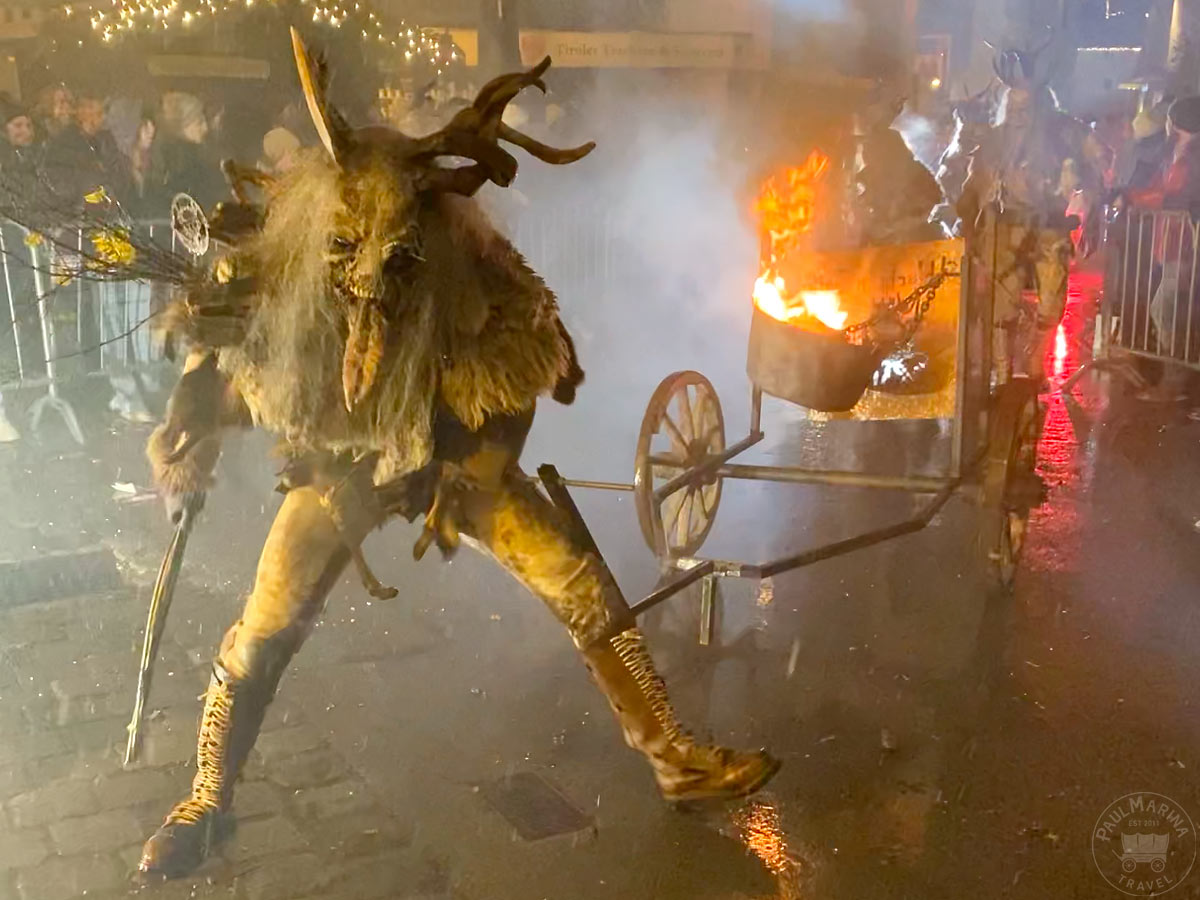
From knocking on the window to watching them take screaming children in their handwoven baskets on their backs, I have seen it all as a kid growing up in Austria.
You will most likely get chills when hearing from far off, during a snowy quiet night, the rhythmical ringing of large cow bells.
These heavy bells are tied to the animal fur wrapped around the waist, and yes, the Krampus are running.


The hand carved horrifying masks made of wood are all unique, and every village and town has a group of Krampus consisting of young men.
Special shows are organized, and you can take part in this most terrifying experience, as they take place in every village and town around the 5th and 6th of December.
Well-behaved kids get a bag of sweets, nuts, and oranges from the holy Nikolaus and angels, who accompany the dreaded Krampus.
When and How to See Them? Join a Krampus Parade on the 5th and 6th of December every village, town, and major Austrian city Christmas market. The latest largest Krampus meeting took place in the evening hours of the 23rd of November, 2024, in Klagenfurt. The dates are not out yet for 2025.
Perchten
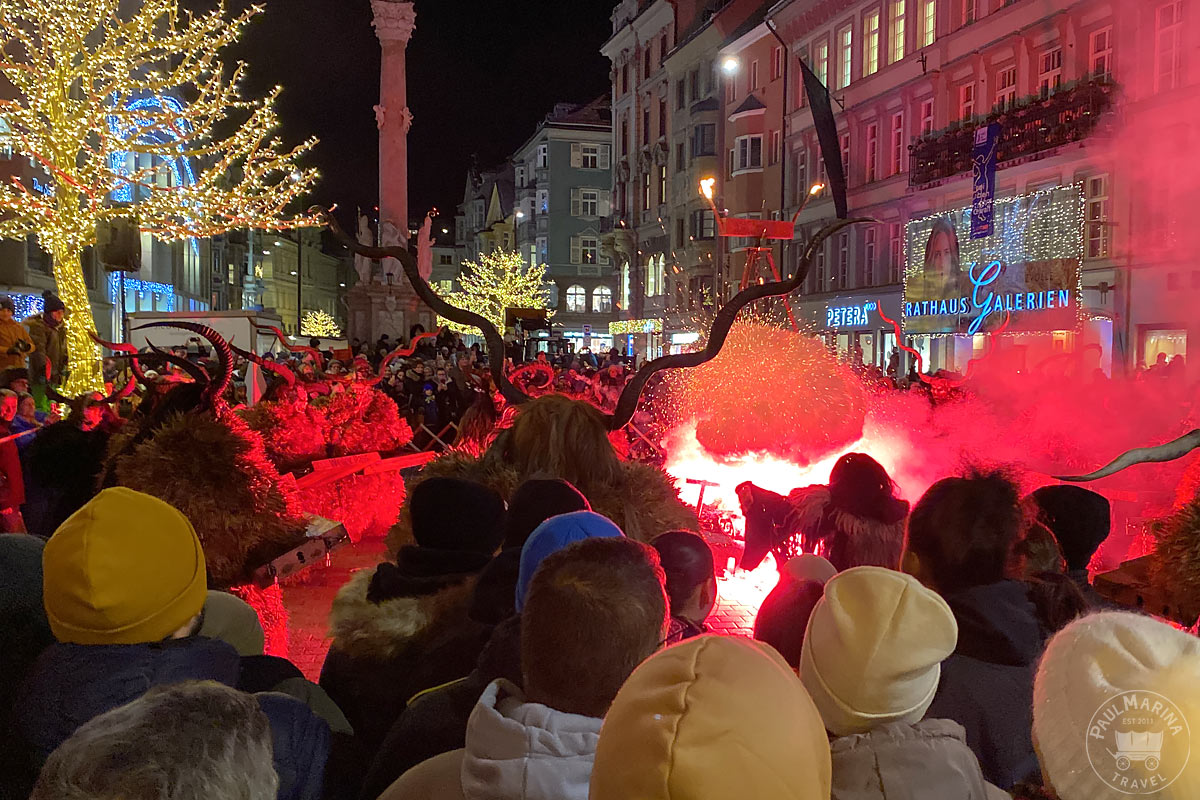
The Perchten are fabled and enigmatic beings that appear during the Rauhnächte in Austria.
Unfortunately, the knowledge around Perchten has been mixed up over the centuries with the legend of the Krampus.
This is due to Christianity forbidding and looking down on these age-old customs.
In ancient times, people believed that the veil to the other world was the thinnest between the 25th of December and the 6th of January, and this is what we call the Rauhnächte.
Therefore, bad and good spirits will come through, and special Rauhnächte rituals are performed to smoke the house with incence.
The old faith dictates that Sylvester, which is New-years's night, serves as a time of renewal, and people light up crackers and fireworks to ward off evil (yep, that's why we light fireworks all over the world fireworks on New Year's Day).
During these 12 nights, various spirits show up, mostly in Western Austria.
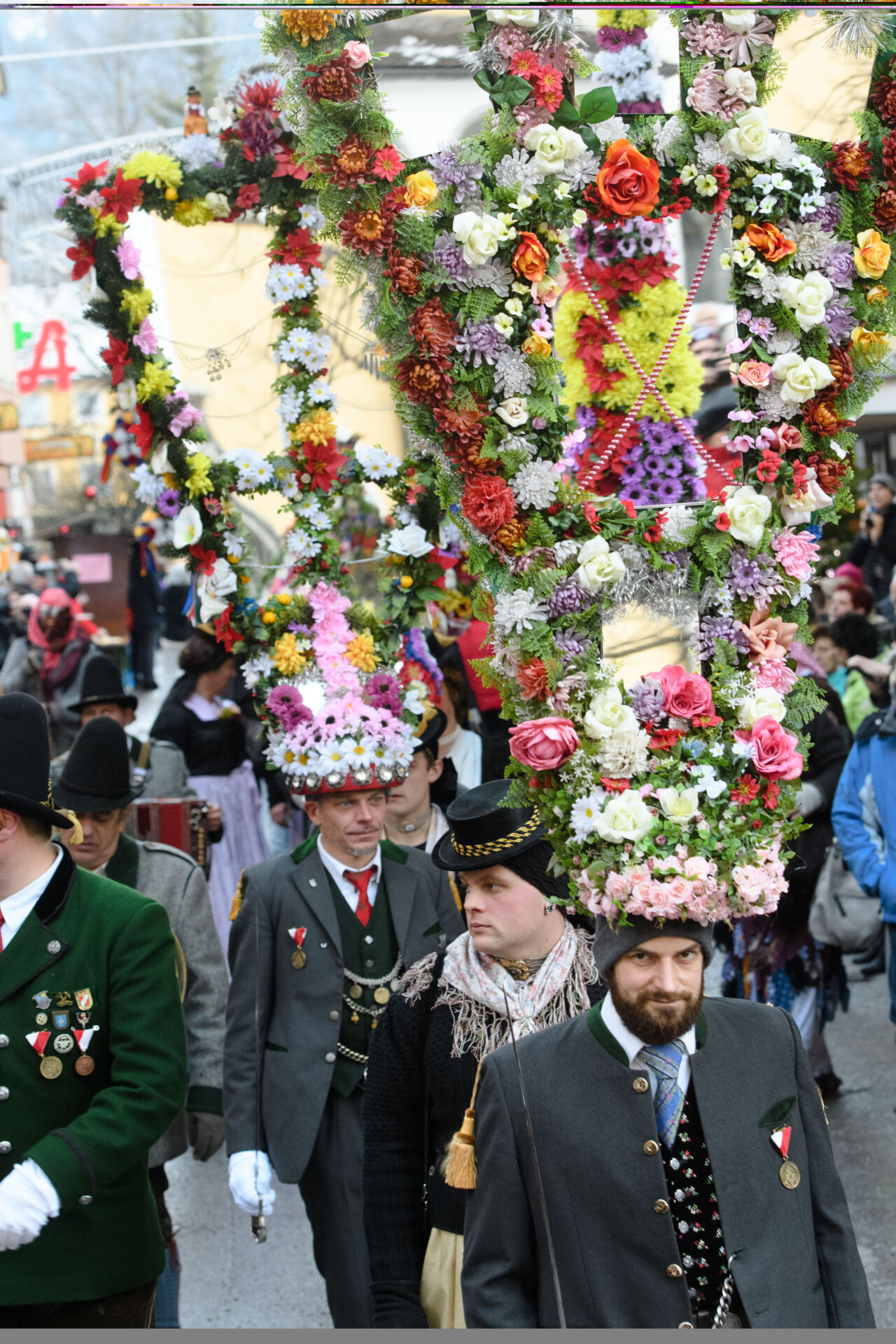
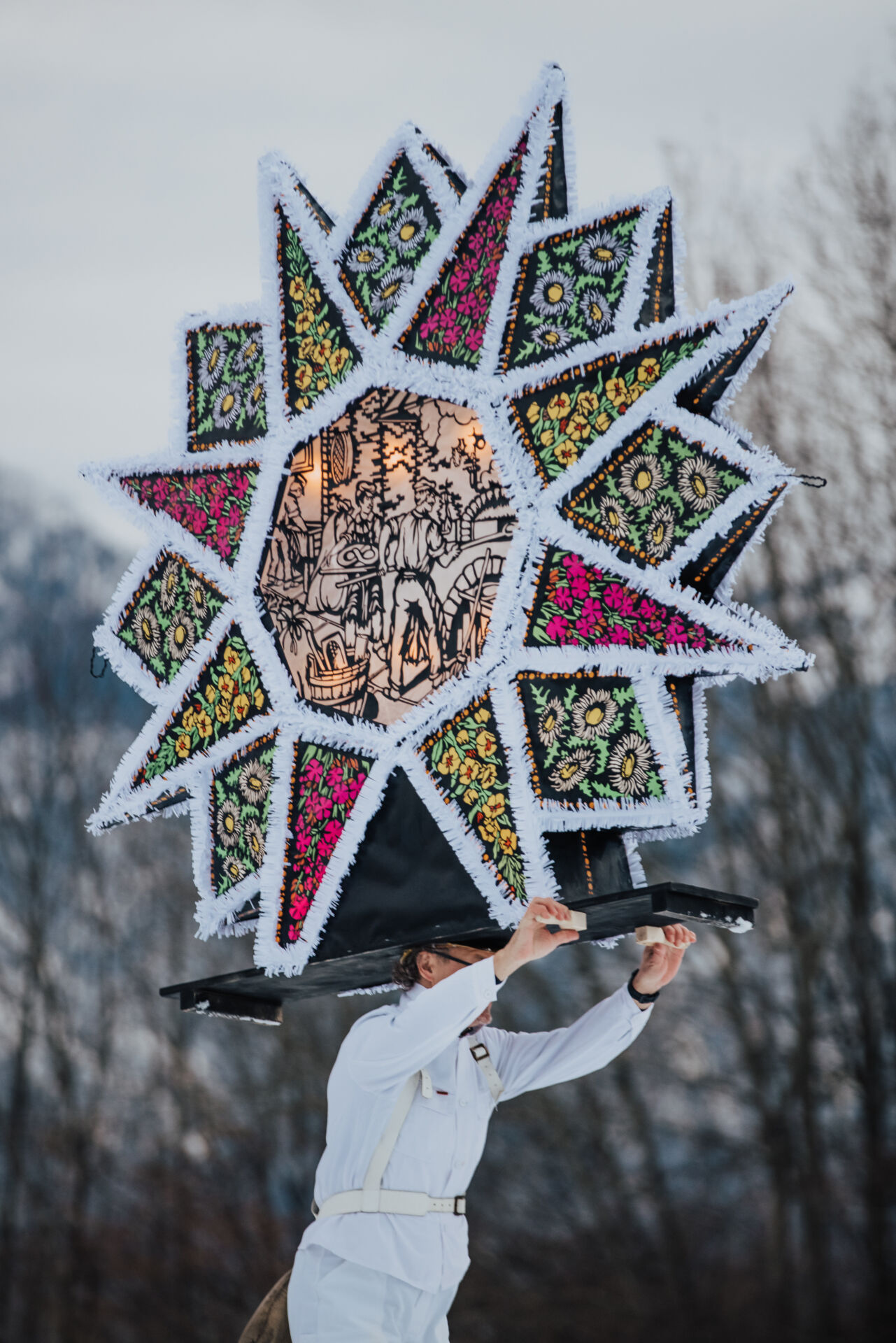
The ugly Perchten are often animal-shaped creatures, and the pretty Perchten, bringing luck, appear more human-like.
When and How to See Them? Perchten parades in Austria are spread out and are very region-specific. Ugly Perchten are more common in Tyrol, and the pretty ones come in all shapes and forms in Salzburg and the Salzkammergut. Many are held on the 6th January, the last Rauhnächte day.
Fasnacht
The Fasnacht is an age-old carnival celebration held mostly in western Austria. Mad creatures appear to drive out the ghosts of winter so as to usher in the spirit of spring.
With odd sounds, colorful strange outfits, and human-like wooden masks, they make their way across specific alpine villages and towns.


The tradition comes to life every few years just before Ash Wednesday in the Vorarlberg and Tyrol region but also extends to the neighboring regions in Germany, Switzerland, and the German-speaking South Tyrol region in Italy.
Some of the most well-known Fasnacht parades, the Schellerlaufen in Nasserreith and the Schemenlaufen of Imst, are even listed as UNESCO intangible world Heritage.


Each parade is unique, and the creatures that appear have a name and a special meaning.
They fool around and are generally good-humored. Costumes and masks are handmade and traditionally set to each village or town.
It's a unique experience. You wouldn't miss it for the world!
More Fasnacht parades:
- Muller & Matschgererwesen, towns around Innsbruck and Hall in Tirol.
- Schleicherlaufen in Telfs
- Bloch-Pulling in Fiss
When and How to See them? They don't take place every year, with some taking place every 4 years, making these folklore traditions unique. I recommend looking up the region-specific Tyrol.com websites, as they keep the info updated.
Midsummer Fire Burning
The 21st of June is the longest day with the most daylight. It gets bright as early as 5 am and dark after 9 pm.
The Celts in ancient times celebrated Beltane on this day by burning a pile of wood as the night set in.
2000 years later, the people in the Austrian Alps still follow a form of this celebration, to the dismay of the church.

We would get together and hike up the mountain and set up our pile of wood, the size of a tall Dutch dude, with broken branches that we would forage in the surrounding forest.
Once it got dark, we would light up the pile of wood so that the people in the valley could see them.
Now imagine, countless small fires scattered on the mountains, with some forming chains and others coordinated shapes such as stars and hearts.

Unfortunately, this tradition has started to die out because people get lazy, and the weather isn't always as favorable. Besides, burning a pile of wood has been partially forbidden for safety reasons.
Yet, you can still see, or even take part in, such a tradition if you decide to stay over in a mountain Alm (alpine cottage). The Angerer Alm, for example, takes part in this mythical custom every year.
When and How to See Them? The burning of the pile of wood is known as Feuerbrennen locally. Most alpine valleys take part in the celebrations a Saturday before or after the 21st of June.
St.Martin's Day
The St. Martin's Day is a special day held on the 11th of November every year. Centuries ago, people would burn torches and light fires to ward off evil.
The number 11, and especially the 11th day of the 11th month, was proclaimed as an evil day, where sin and excess came with the devil.
For a brief period over 200 years ago, the state forbade these celebrations, but eventually, they came back full-blown.
Besides, the 11th is also known as the official starting date of the Carnival period, which lasts until Fat Tuesday. The 11th November carnival is mainly celebrated in Germany.
In Austria, instead, we have Kindergarten children preparing cute themed paper lanterns, and they then walk coordinated in the dark night around, singing the song of “Ich gehe mit meiner Laterne...”, which translates to “I go with my lantern...”.
It's dazzling and one of my favorite traditions as it is unique and not all that Christian after all.
When and How to See them? Every village and town with a Kindergarten hosts St.Martin's day in Austria. Just head to the town square when it gets dark and soon enough you will see crowds and kids walking around synchronized and singing with their lanterns.
More Austrian traditions to participate in



Comments
No Comments