

Italy is a lovely country to explore, but it's not without dangers. The busy tourist industry attracts all types of scammers, and you need to be on guard.
I have listed all the tourist scams that we have encountered in Italy in 2025, and you will most probably come across a few in all the major Italian cities. At least you will be prepared, thanks to this guide.

Jump to:
- Fake Room Listings and Tourist Tax Overcharge
- Cups and Ball Game
- Flower Rose Scheme
- The Painting on the Floor Scam
- Gas Pump Scheme
- Restaurant Price Scam & Hidden Charges
- Bracelet Scam
- Fake Petitions & Religious Conversions
- Fake Artifact and Handmade Souvenirs
- Luggage Help, Train Station/Metro Scam, Fake Train Inspector
- The Beggar Swindle
- Misleading Roman Legionary & Camera Photo Trick
- Fake Nuns and Monks at the Vatican
- Fake or Overpriced Attraction Tickets
- Car Rental Damage Fraud
- ATM Tourist Ripoff
- 💬 Comments
Fake Room Listings and Tourist Tax Overcharge
Fake room listings have been appearing all over the world in the last few years, and Italy is one of the major destinations where this scam is taking place.
It goes like this: You book a room or full apartment on Airbnb or booking.com. The booking appears as accepted, but they cancel the booking a day before your arrival and suggest to book it offline instead (which is a bad idea because your booking won't be insured).
In more drastic cases, you arrive in the city and search for the place without ever finding it, and then they cancel it, marking it a no-show. You'll be fighting for your money, if they have a strict return policy. Keep in mind that prior reviews can be fake as well.
Just as a side note, be warned that some places are being targeted by burglary gangs.
Another issue that you may face, is a tourist tax overcharge. We all have to pay tourist tax per person and per night in Europe and every country, region, and city gets to set a rate and the type of establishment can increase the rate amount as well.
The lack of tourist tax transparency makes it difficult for one to assess the actual rate that you need to pay. Therefore, I recommend looking it up online and do not ask hallucinating chatbots because they can spit out half-baked truths.

Cups and Ball Game
The most famed scammer game in Italy, and other European countries, is the cups and ball game. This is how these gangs operate:
A man is holding three cups and a ball, and you can place a wager. After that, you're asked to guess where the ball is. But the position of the ball is changed, and you are bound to lose because it's a scam after all.
While you watch, a group of people will be standing around, and you will see one of them win $200.
The truth is that the winner is part of the gang, and they are making up this fake chance to win to get you to join.
Simply stay away from these people and refrain from participating. They can get aggressive at times.
Here is a reel that we took of a cup and ball game in Rome. A dude approached me, pretending to be on a call, telling me to stop filming. These people are just relentless.

Flower Rose Scheme
Couples, usually younger ones, are the target audience for the flower rose scheme. The man will approach the couple with a bouquet of flowers and present the girl with a rose, without any prompting.
He then proceeds to request an amount that is generally considered excessive. The man will experience feelings of embarrassment, which is why this scam is so irritating.
They are specifically going after new couples.

The Painting on the Floor Scam
This particular incident has been primarily observed in Italy, where a group of African individuals were engaged in the sale of paintings. These appear to be paintings, but they're actually printed AI slop.
They set them down on the floor in high-traffic areas, such as in front of the cathedral in Milan or Florence, and then wait for individuals to approach them.
The claim will be that you damaged the painting by walking on it. Naturally, you will then start to argue, and some of them will threaten to make you pay because you will be terrified.
Please report this scam to any patrolling police officers you come across.

Gas Pump Scheme
We experienced a gas scheme near Rome in April.
These gas stations operate with an automatic card payment scheme. We are used to these, but this particular gas pump was misleading and only in Italian.
Two Bangladeshi were seated nearby (the gas station was completely abandoned otherwise) and one came over, took charge without us asking for his help and then went on to pump gas into your car.
We realized what was happening and started a loud argument between the two of use. The dude was about to ask for money and my wife was furious, and we somehow escaped a situation with this sketchy guy.
Gas stations in Europe do not have helping hand operators (like in Asia or Africa) and these sketchy guys did not wear a uniform. There was no gas station shop in sight either.
Restaurant Price Scam & Hidden Charges
It's best to stay away from restaurants in touristy areas. You can find a decent, honest restaurant by taking a few side roads away from the main tourist area. Follow the locals.
Because shady places hide food prices or give you a tourist menu with high prices, or they will add strange fees to the bill.
My SIL just came back from Verona, where they came across a funky Gelateria selling Giulietta Ice Cream (as in Romeo and Juliette). They ordered 2 cones and were presented with a whooping €25. They argued that the prices were not listed anywhere, and sure enough, the bill was reduced to €12 (which was still overpriced for 2 scoops of ice cream).
Always check your bill twice, and if there are any questions, ask the server. Your waiter needs to give you a bill. Small take away places have the tendency to NOT give a bill (black money) and some ask for cash only. We had this happen to us at 2 Gelaterias in the Jewish quarters in Rome.
In Italy, there is a unique table seating fee, which is referred to as Coperto. This fee is not a sham.
Also, tap water isn't free in Europe, free refills of soda aren't a thing either, and I recommend you read up my Essential Europe Travel Tips Guide.

Bracelet Scam
The bracelet scam is prevalent in Rome and other popular cities in Italy, including Venice, Milan, Florence, Bologna, and Verona. You will encounter it at narrow public bottleneck walkways or next to well-known landmarks.
Most of the people involved are black Africans, and they will approach you and call you a friend while trying to put a bracelet on your wrist before you can react.
They anticipate that a few individuals will be confused, and they capitalize on this. Within a minute of saying, “it's a gift,” they will demand payment. Their demeanor will alter if you decline.
Stay far away from them and learn how to say “No” in a firm voice.

Fake Petitions & Religious Conversions
For fake petitions, con artists walk around tourist spots and act like they can't hear. American citizens are their primary target.
The names, signatures, and presumably the cash contributions made are all false information on the petition. Don't fall for it!
Broadly speaking, stay away from similar setups like religious organizations and cults. Scientology and Jehovah Witness commonly set up book information stands in busy marketplaces.
Fake Artifact and Handmade Souvenirs
Handmade souvenir shops and artifact shops strive to convince customers that the items they sell are genuine vintage items and artifacts. It's just, they are not.
All these are Chinese mass-produced goods.
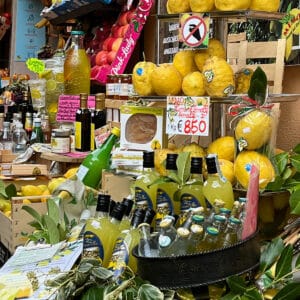
We spotted one in Venice years ago (see picture below), and yep, back then we fell for it. If you are unsure, go into the shop, look at the item in detail, and with a trained eye, you can make out the fake nonsense.

Luggage Help, Train Station/Metro Scam, Fake Train Inspector
This one is common at busy train stations in all major cities.
The first involves a porter asking to help you with your heavy luggage. They may ask for an inflated price, or they may take off with your suitcase. Either way, it's not the first impression of a city that you are aiming for.
The second is about a helpful stranger who shows you how to use the ticketing machine, and at some point they will ask for money for having been an assistant.
At last, keep an eye out for fake train inspectors. They wear a uniform, ask to see your ticket and passport, and then come up with a fictional cash fine. Real inspectors can be recognized on their visible badges.

The Beggar Swindle
Unfortunately, organized beggar groups have been a problem for Europe; many of them are from the Middle East, while others have a Roma background.
You have no way of knowing who is really in need and who is part of this network of con artists and fraudsters. There are also ties between these groups and other crime groups.
However, thanks to NGOs and other groups, most cities have a system in place to help people who are living on the streets.
Begging swindlers are most common in busy shopping lane areas, at narrow passageways on bridges etc. Many kneel on the floor and hold out a cap for money. Occasionally, it's an old lady.

Misleading Roman Legionary & Camera Photo Trick
You will encounter a single person dressed up as a Gladiator or another costume at popular landmarks in Italy.
People are inclined to take a picture and, yes, it doesn't come free.
Don't be so naive as to think that they are doing it out of kindness; instead, ask them up front how much it will cost. They are not employed by the City Tourist Authority, and sincere individuals will disclose the fee prior to the photo session.
The Camera Photo Trick is very similar. Someone out of the blue asks if you and your family or friends want to take a picture in front of a famous landmark. They quickly take your phone or camera and then demand payment. It's misleading.

Fake Nuns and Monks at the Vatican
Yep, fake nuns and monks ask for donations at the Vatican in Rome.
Just don't engage with them. If you feel the need to donate money to the church, you will certainly come across donation boxes in the Vatican churches.

Fake or Overpriced Attraction Tickets
Only purchase attraction tickets from known sources and not some random dudes on the street.
Especially, so-called overpriced skip-the-line tickets may seem tempting.
Authentic skip the line tickets to popular sights such as the Colosseum in Rome can be purchased online. That means you skip the waiting line to purchase them offline, but you will have to stand in the queue for the security check.
Also, keep an eye out for people claiming that a sight is closed (when it isn't) just to sell you a much more expensive experience.

Car Rental Damage Fraud
Make sure you rent from reliable foreign companies at all times. Incorporate an additional layer of protection by using a credit card that includes damage insurance to reserve the rental car.
Take images and a video of the car when they hand you the keys. Cover all angels, inside and outside the car! If you observe any damage and have any reservations, inform the owner before driving the car.
If you have documentation showing that the damage was not caused by you, you cannot be a victim of car rental damage fraud.
Look over the invoice for any strange or additional fees. Find out where you can pick up the car, and if it's in a garage, ask them to bring it outside so you can see if there is a scratch.

ATM Tourist Ripoff
Euronet ATMs are everywhere in Europe. They are consistently situated in the most congested and tourist-frequented places.
They charge tourist debit and credit cards a lot more than local cardholders. However, these ATMs are not used by the locals.
When the instructions are followed on the screen, the system is configured in a manner that is highly misleading.
Unless there is no alternative, I personally refrain from using them, and I suggest that you do the same, as there are better options in the cities. You can always find an ATM pod at a bank near you.
On the same subject, be vigilant for ATM skimmers. They steal your card information when you put it in the green part of the ATM. Skimmers are positioned over the actual ATM card insertion point and appear to be an integral component of the machine; however, they are not. They will steal your card information and empty your bank accounts.
The same fraudulent mechanism is used on debit/credit card paying machines in stores. Use the contactless card system instead and check if your card is contactless before you leave your country (request for a contactless card from your bank).




Comments
No Comments