Before you travel to the European continent, you should know how the continent flows when it comes to regulations, money matters, and local customs.
I share an array of straight-to-the-point tips and essential local knowledge. You will understand the situation better, and you will know what to expect on your upcoming trip to Europe.

Jump to:
- TL;DR
- Voltage and Travel Charger
- Good Walking Shoes
- Public Transport
- Drinking Water
- No Free Soda Refill
- Pay Toilets
- Parking
- Cash Situation
- Local Currency
- Tipping
- Dress for the Environment
- Don't get scammed
- Food Places
- Leave the Cows alone
- Respect Properties & Places
- Shop Closing Times
- No Air Conditioning
- Hotel Rooms
- English Language
- Travel Insurance
- Move around with your ID
- Safety at Night
- Tourist City Tax
- Deposit Room Bookings
- Lockers in Museums
- 💬 Comments
TL;DR
Traveling to the European continent can appear like a trip to your next-door state.
Yet, every country in Europe is extremely diverse, and you will definitely encounter situations that you have never experienced back home.
I elaborate on the various pitfalls and differences that you may encounter on your trip to Europe so that you can prepare for each situation mentally in advance!

Voltage and Travel Charger
The voltage in Europe is 220 to 230 volts. It's not universally the same all over the world. For example, North America runs on 110 to 120 volts and Japan on 100 Volt.
Many modern travel adapters and small device plugs are built to work on dual voltage levels.
I still highly recommend that you check your cell phone and hair dryer plugs before your trip.
When cables and plugs are not built for higher voltage, they will get damaged, and your current can trip.
Apart from that, plug and socket types are not standardized across Europe. That means several countries use different plug types.
- UK, Ireland & Malta: Type G.
- Switzerland & Lichtenstein: Type J.
- Denmark: Type K.
- Italy: Type L.
- Rest of Europe: Type C, Type E, Type F.


Good Walking Shoes
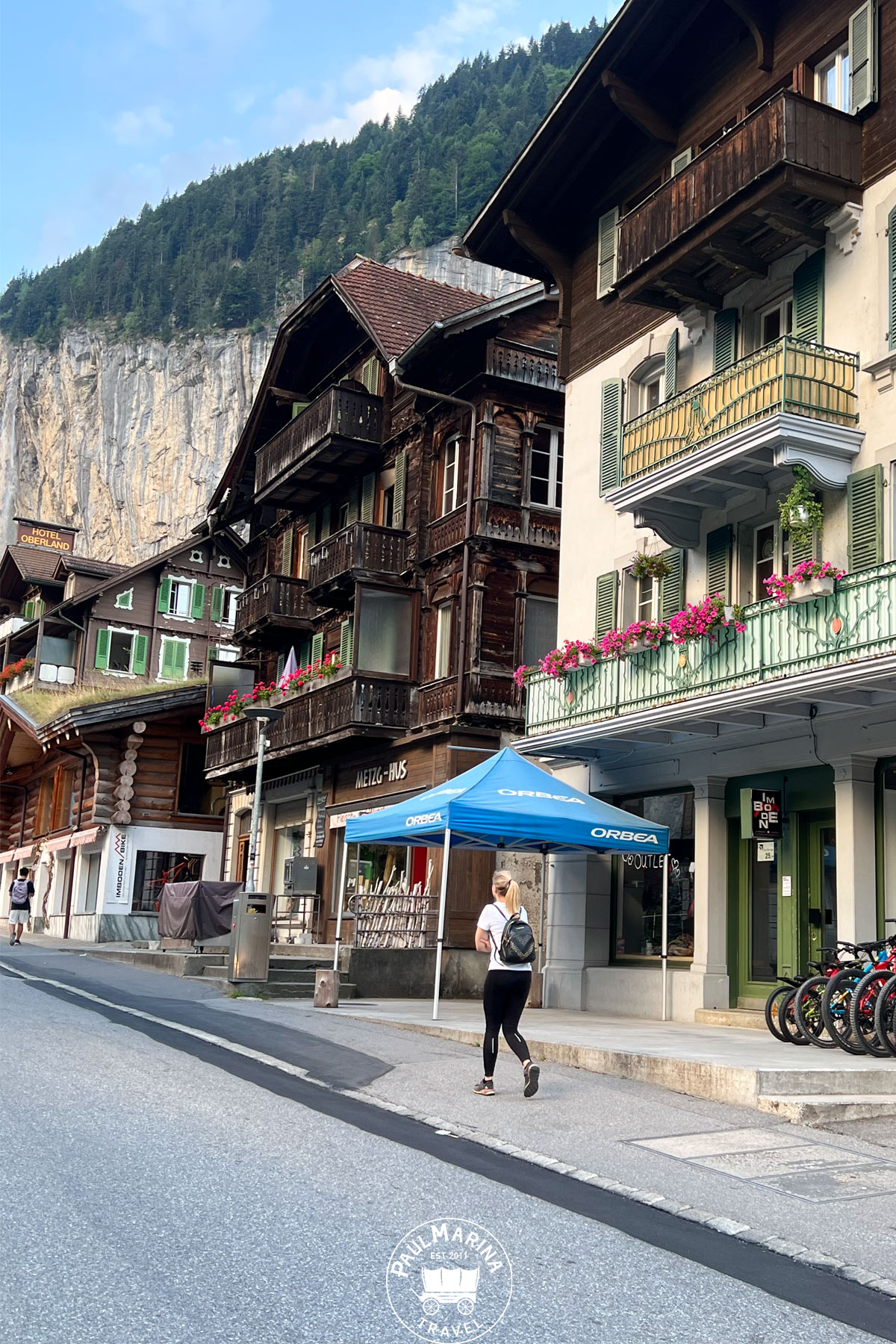
You will be mainly walking around in all countries in Europe, and therefore you will need comfortable walking shoes.
Walking is part of life and everybody does it. You walk to the shop, you walk to the post office, you take your dog for a walk etc.
Especially in cities, this is a law because cars are being eliminated from city centers. So people walk or take public transport.
Keep in mind that many old towns are cobbled and walking on those can be tiring eventually. Therefore, get a good pair of shoes!
If you intend to go for a hike, bring hiking shoes or buy them in a store.
If you are traveling to snowy destinations in winter, come with winter boots.

Public Transport
In all major cities, use public transport only. It's the best option to get around, and most tickets are affordable.
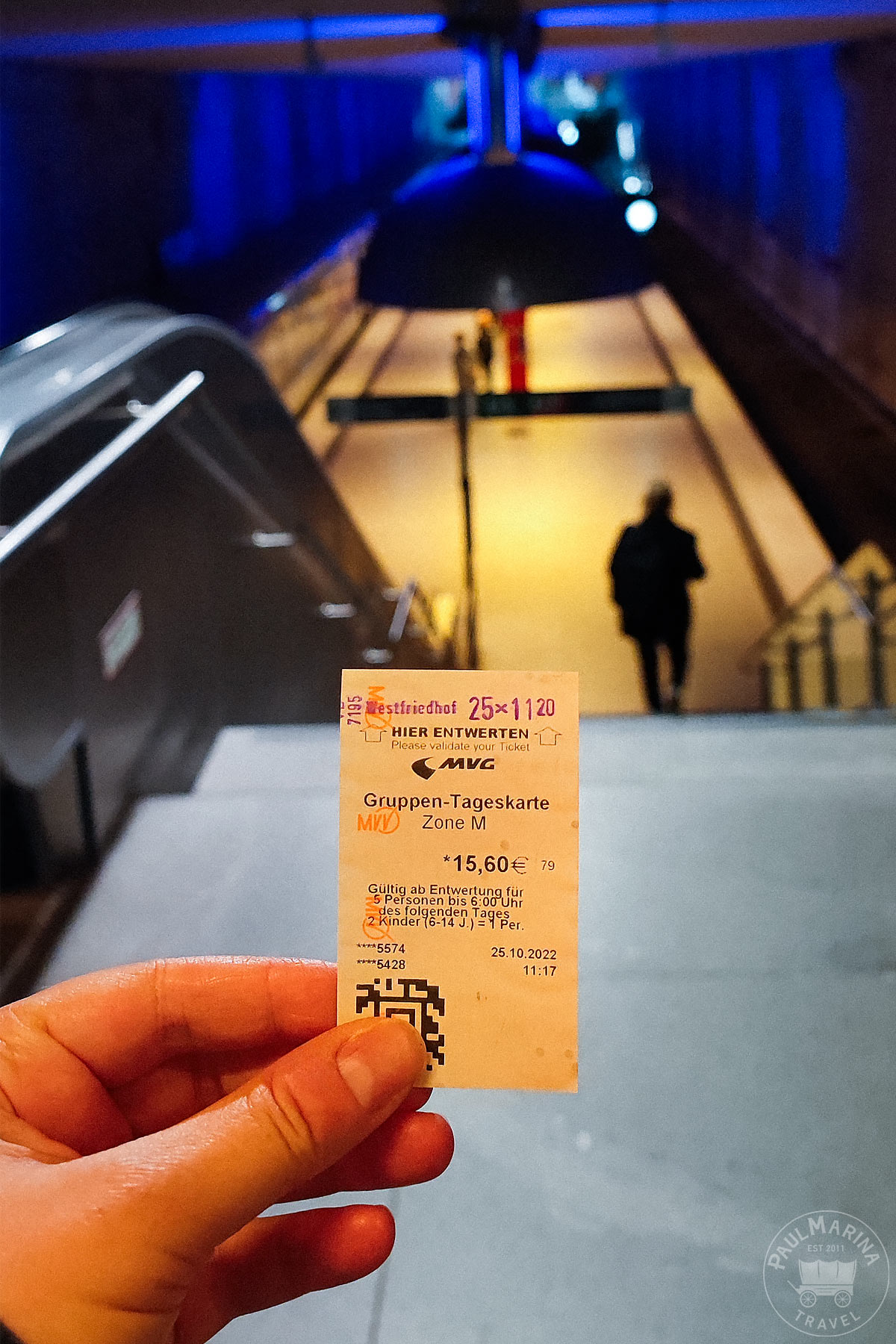
Don't forget to always validate your public transport tickets! Authorities randomly check if you have a valid ticket.
Avoid overpriced taxis and hop-on-hop-off buses in touristic cities like Barcelona, Milan, Budapest, and Prague.
If you are in a rural area, you will find that public transport, i.e., buses, are not as frequent. In that case, it's better to hire a cycle (E-Bikes are popular) or get a car rental.

Drinking Water
Drinking water in restaurants is rarely free. You have to pay for it.
For example, a small bottle of water in a Café or restaurant will cost you about €2.00 to €4.00, depending on where you are traveling in Europe.
Bottled water always comes either as plain, flat unflavored water or as sparkling water. It's usually mineral water, that means water with minerals in it.
Water rarely comes with ice cubes.
Many city, towns and villages, especially in and around mountain regions, have small water wells and drinking fountains installed.
You can collect water for free in your bottle from these fountains.
Not all water fountains offer drinking water. This, for example, is most prevalent in France. Look out for a small signboard saying that it's not drinking water.


No Free Soda Refill
This is for our North American friends traveling to the European continent.
Restaurants across Europe do not offer free soda refills, i.e., Cola, Fanta, Sprite etc.
You have to pay for every subsequent refill.

Pay Toilets
In many countries and regions across Europe, you will encounter pay toilets.
That can be in a McDonald's in Paris, on a highway stop in Hungary, at the main railway station in Austria, or at a public city restroom in Germany.
Occasionally, it's an automatic machine, and many of them take only coins in the local currency.
Highway stops tend to take cards too, and as a return, you receive a voucher, which you can use to purchase stuff in the merchant's store.
In Germany, you will also encounter ladies who sit at a table in a restroom (e.g., beer garden) with a small plate filled with coins. Here it's optional to leave a few coins; it's not a must.

Parking
For those of you going on a road trip, most parking lots are pay parking in European countries.
That said, certain areas, for example, in Italy, offer free limited-time parking, and others are completely free. Often, you will need to display a parking disk.
Look out for signboards, or go on Google Maps and check the comments and photos or parking prices.
The systems to pay for your parking are not universally the same.
We have encountered systems that scan your number plate and others where you don't have to even mention your number plate to get a pay parking ticket.
Many of these parking systems take only coins and some cities have set up mobile app payment options, but those don't always work with foreign phone numbers (to receive One-Time Passwords).
Get plenty of coins to navigate parking situations!


Cash Situation
Unfortunately, you will encounter businesses that only take cash in Europe.
We have talked about it in our cash only in Germany and Austria post.
The most prominent cash only situations are boat rentals (e.g. Zell am See, Hallstatt), local fairs (Oktoberfest), mountain restaurants, markets (Budapest market hall). The city of Berlin is also known to be cash only.
I recommend getting cash from a reliable ATM. That means, avoid scammy Euronet ATMs. Use ATMs attached to banks, these are the ones that locals use.
Also, avoid exchanging money, you will get a bad rate.

Local Currency
Check the local currency. Not all EU countries use and accept Euros. For example, Hungary and Czechia have their currencies.
Nobody takes USD in Europe, you will have to exchange them.
QR Code payments are still not that common. Europe is lagging in payment technologies.


Tipping
In Europe, you only tip if the service was good. That means there is no compulsion in tipping.
Locals tip sometimes and only if they think the service warranted a tip.
In that case, they will round up. If your bill is €48.40, roundup to €. You do that by telling them to roundup to xyz amount. That's all.
Lately, we have observed misleading and manipulative waiters in popular Tourist food places. It happened to us once in Vienna, once in Munich, once in Bratislava and a few times in Club-Napoca in Romania.
The scheme is to come up with the bill and ask for 10% or 20% tips. They come up with stories that it's a new government regulations, and that's a lie.
If they ask you, say simply no, thank you if the service didn't warrant a tip. If you liked the service, you can leave a few coins, even if you paid by card, or ask to round up to your desired total.
It is very rude and bold that they ask for 10% or 20% tips, and respectable restaurants won't allow this because waiters are paid well enough in Europe.
In Italy, they add Coperto to the bill, which is a separate cover charge that you have to pay.


Dress for the Environment
I highly recommend checking weather forecasts in various regions before your trip. Pack your outfits for the journey accordingly.
To not stand out like a sore Tourist thumb, watch some walking tour videos of your European destinations. With that approach, you will see how the natives dress.
Be respectful and don't dress inappropriately. Keep in mind that it's a different culture.
Think Italian church etiquette. Be demure and mindful, don't just walk around bare chested, guys, and with a bikini top, ladies.
Dress more like the natives and get comfortable clothing. Bring different set of clothing in temperate seasons.
For example, it can either get cold or hot in October on lake Como in Italy. Or remember to get extra jackets because mountains summits such as the Piz Gloria in Switzerland can be cold in summer.


Don't get scammed
Easier said than done. Be aware that scammers and pickpockets are omnipresent in certain spaces in European capitals.
For example, around the Eiffel Tower in Paris, near the cathedral in Milan or on the main square in Prague.
They will pretend to help you with a subway ticket, they will ask if you need to exchange money, and they will get your attention in a cup and ball scam game.
Take care of your backpack, handbags and don't fall for lies. Stay informed at all times!


Food Places
When choosing a restaurant, pick one that isn't on the tourist lane. These restaurants make a living on inexperienced vacationers, and that means overpriced, poor quality meals.
In Italian cities and Paris, France, it makes sense to avoid restaurants that have a person trying to lure you in. If a menu card has pictures of the food, it might not be the real deal, but instead a tourist trap.
Moreover, be aware that several European countries have restaurant types. For example, in Italy they have Osteria, Trattoria and Restaurants and in France, you will come across Brasserie, Bistro, Café, and Restaurants.
In numerous countries in Central Europe (Austria and Germany) it is common that restaurants close orders after 1:30 pm.
Keep in mind that food portion sizes vary between countries in Europe. The portions can be huge in Germany, Austria, Hungary, Slovakia, Slovenia, Romania and Czech Republic.
Other countries, such as France, Italy, Spain and Protugal offer much smaller food portions.


Leave the Cows alone
This is a problem that we have mainly encountered in the Austrian and Swiss alps.
Cows are left to graze freely on the alpine meadows during the summer months until the Almabtrieb.
The cases of hikers getting attacked by cows in the alps have increased.
Don't go to the cows and try to pet them. Mother cows are also very protective of their small calves.
Bulls are rare in most areas (because they are too dangerous) but the cows are the ones that attack hikers. It's always because someone tried to mess with the animals, even if it's just a selfie.

Respect Properties & Places
Be respectful of the people's property who live there.
We have seen tourists wandering off into people's yards in Hallstatt or picking up their garden decorations.
Add to, that, that people were also picking up skulls from the Hallstatt bone house, which is, for obvious reasons, forbidden.
You can't just fly your drone above people's houses. It's prohibited all over Europe. Also, national parks are off-limits. If you want to fly your drone, first get informed if you comply with local laws and check the drone map. Every country has a fully operating drone map.


Shop Closing Times
Be mindful of shop opening and closing times in Europe. That also includes large grocery stores.
You will mostly encounter early shop closing times in Austria and Germany. All grocery stores close somewhere between 6 and 8 pm.
All shops, not just grocery stores, are closed on Sundays, and most are open for half days on Saturdays. Cities, towns, and villages are eerily quiet on Sundays in Austria and Germany.
Banks and post offices can close as early as 4 pm, and certain places, such as hairdressers (if you ever need a haircut), are closed on Mondays.
In hot southern countries, you will encounter siesta times. For example, in Southern France and Spain, it is common that shops close during the hottest hours of the day, to reopen later for the evening.


No Air Conditioning
Air conditioning is not the norm in Europe. You will rarely encounter it.
If you care about ACs, you will want to filter for hotels that explicitly mention air conditioning.
If you are used to air-conditioned spaces, you will need that during the hot European summer months.
The only places you won't need ACs are in the Alps and probably Scandinavia and Iceland.
Everywhere else it gets super hot in the summer in European capitals, mid-sized towns, and also villages, and that's not just Southern Europe.
Hotel Rooms
Hotel rooms in European countries tend to be smaller compared to North America.
Most showers are equipped with European showerheads that can be moved.
You might encounter European windows that are tilt and turn.
The bedding doesn't have a top sheet, as is common in North America. Instead, the duvets are in removable covers.
Most breakfast buffets have a local element included. You will get slices of cheese, cold cuts, warm meals, muesli, and oats.
More useful tips to book your perfect hotel in Europe.


English Language
English is the national language in Ireland and the UK only.
You will encounter locals, especially in tourist areas, that speak and understand English, but English is nowhere else the norm.
Most countries in Europe have one more language. In France, they speak French, in Greece Greek, In Bulgaria, Bulgarian, in Belgium Flemish and French etc.
Wrap your head around that: Switzerland has 4 official languages.
People in Luxembourg speak 3 languages, German, French and Luxembourgish.
In Germany, they have various German dialects, and in Austria also, but with a separate set of Austrian German vocabulary.
I recommend Google Translate when you are in a European country. You can scan product labels and menu cards with the translation lens function.


Travel Insurance
It goes without saying that you need travel insurance when you are abroad.
If you use a credit card for travel insurance, make sure to get a return plane ticket, or else the insurance won't cover your charges.
Move around with your ID
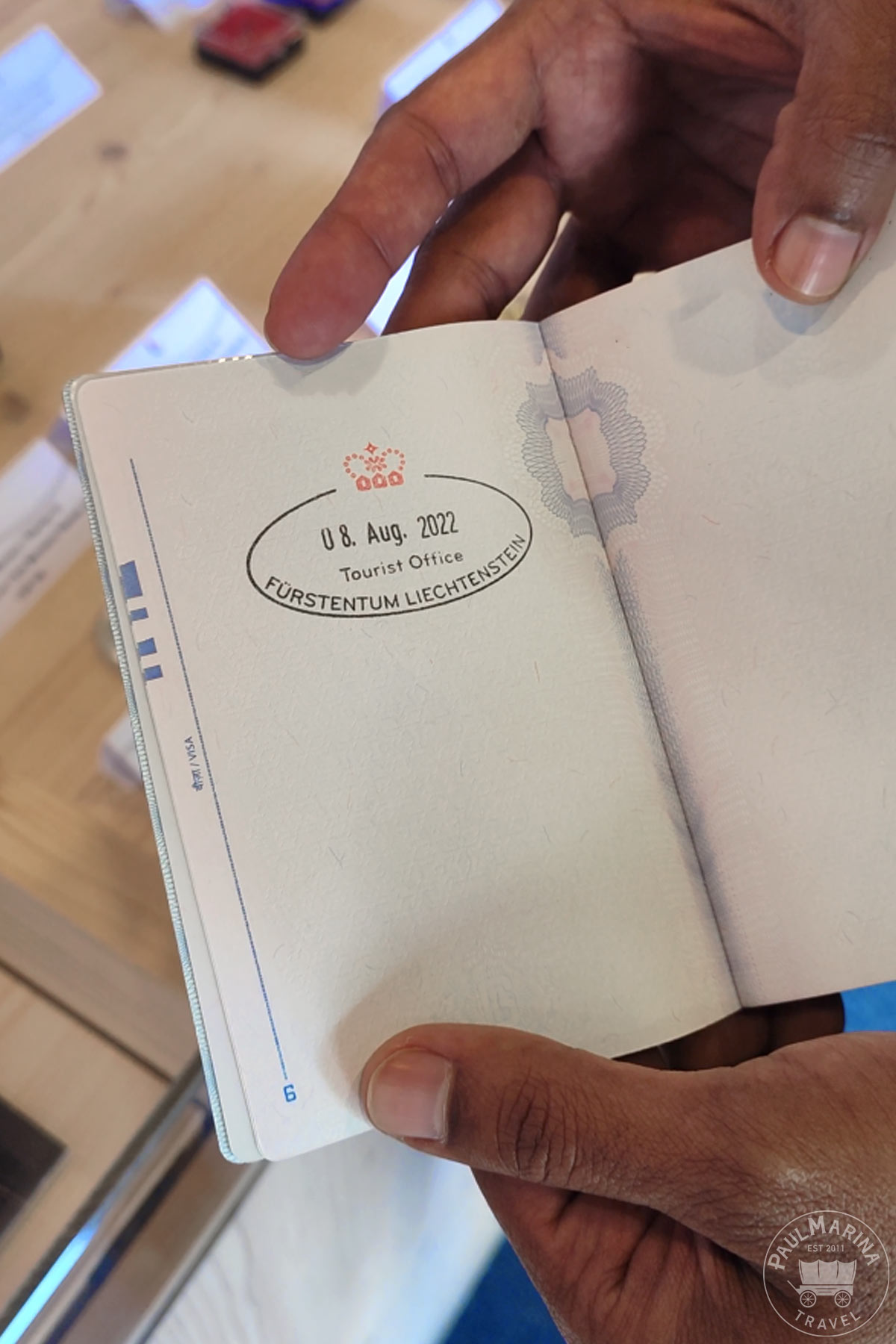
By law, you must always carry your ID when you move around in any of the European countries.
Police can stop you anytime, even if you're just walking down the road, and ask for your ID. You can face penalties, or they can take you to the police station, if you do not have an ID to show. It's not a scam; it's real.
Your driving license is not your ID, your ID is your passport or your national identity card.

Safety at Night
Not all places in Europe are equally safe. I would never walk around alone at night in certain areas in Marseille, France, or Naples, Italy.
In other places we have always felt safe, and that included better neighborhoods in Vienna, Munich and Budapest.
Most villages, towns, and smaller cities are usually perfectly safe in Europe. Especially, rural Eastern Europe (Romania) always felt very safe compared to rural Western Europe (France or Spain).


Tourist City Tax
The tourist city tax is a real thing and not a scam. At least in all Western countries, you will be charged a tourist tax on your stay.
However, the concept has not completely been implemented in East European countries. We are still unsure if Budapest actually charges a tourist tax, and Romania doesn't have a tourist tax yet.
Every city, region, or country has different laws and will charge you a tax for every night that you stay. That can be a fixed amount or a percentage.
Some countries do not include it in the room price. That means you will have to pay tourist tax at the reception separately.

Deposit Room Bookings
There are instances when, you book a room directly with a hotel in Europe, you will be asked to pay a deposit in advance to reserve the room in your name.
This is common practice, especially with hotels with higher star ratings.
Why would you want to book a room directly with a hotel? Well, oftentimes you are offered a better price and a more comfortable room. Booking.com and Expedia bookings always get the worst rooms.
A few hotels prefer cash payments, and they may reward you with a small discount. There is no loss in asking the reception.


Lockers in Museums
Most museums, especially art museums, do not allow you to enter with a backpack or larger bag.
They do, however, provide a locker or wardrobe system on the premises. Suitcases usually don't fit into lockers, and many of the lockers are operated with coins.
Food, drink, and pocketknives are also not allowed in museums. Leave it in the lockers.