Some experiences in Europe are dressed up to look local, but behind the scenes they're just tourist showpieces.

Beer spas and themed dinners may look authentic at first glance, but many are nothing more than a spectacle built to sell a fantasy.
Beer Spas in Prague and Budapest

Beer spas have emerged in Budapest and Prague in the last few years, and they sell them as expensive “authentic” experiences to tourists.
Prague might be known for beer, but it definitely doesn't have healing natural thermal waters. Claims such as “anti-bacterial and anti-inflammatory” just take it to a whole new level of cringe.
Budapest, on the other hand, has a rich thermal bathing tradition, but that doesn't involve beer. Thermal spas are purely considered therapeutic in Hungary, and beer doesn't fit into the local wellness narrative.
You will never encounter natives in these European cities planning a day at a made-up beer spa, which is basically just a hot-tub in a room where they serve you some random beer. You'll probably get the same experience at an upscale hotel whirlpool.
Trdelník in Prague

We talked about the tourist favorite, Trdelník. These are spit-roasted, cylinder-shaped, hollow pastries that are anything but traditionally Czech or from Prague.
To make matters worse, Trdelník are sold and used as ice cream cones. This latest Instagram trend has been purely propagated by tourists and migrant shop owners in the old town.
Trdelník are from Slovakia, a neighboring country, and variations of this pastry exist all over Eastern, Central, and Northern Europe.
Mozart Dinner in Salzburg and Vienna

Salzburg and Vienna are classical music hubs. Naturally, you'd want to experience a live classical music ensemble if you have traveled all the way for this experience.
In that case, avoid staged classic music shows sold as Mozart dinner events in ballrooms. The musicians dress up in Baroque cosplay costumes and put on their wigs and makeup. The overall quality is sub-par.
These events are known as tourist orchestras, and they are not authentic experiences that locals frequent.
Instead, if you are in Vienna, plan an evening at the Musikverein or the Wiener Konzerthaus, and if you are in Salzburg, go for the Mozarteumorchester (which is the oldest symphony orchestra in Austria).
Sangria in Spain

Sangria is omnipresent at popular tourist spots in Spain. You will definitely see it on bar and restaurant menus in places like Valencia, Barcelona, and even in the Balearic Islands.
But a bowl of sangria wine with fruits isn't something locals ever drink when they go out. This particular party drink is specifically prepared and sold to tourists only.
Instead, locals prepare it for special occasions or a family BBQ at home, but that might be a regional thing, and it's not commonly done all over Spain.
Italians, on the other hand, have adopted sangria as if it were their invention!
Dracula Tours in Romania

Dracula is a novel by the Irish author Bram Stoker. The story is based on the Transylvanian region and the Wallachian ruler Vlad the Impaler.
The Bran castle, has since then been promoted as the Dracula Castle, and countless visitors just come all the way to see this tiny castle in Romania. It's completely surreal.
With that you get Dracula tours, Dracula merchandise, and every other Dracula-themed experience in Romania, such as the birthplace of Vlad or his real home fort.


Apparently, people believe that the Dracula story is real. Lately, I have also come across people who thought that Transylvania was a made-up place (I don't know whom to thank for this).
That said, the historical regions of Transylvania and Wallachia are scenic destinations, and I highly recommend exploring them!
Viking Helmets in Scandinavia

Viking helmets are popular tourist souvenirs in the Scandinavian countries, including Denmark, Sweden, and Norway.
These “helmets” include horns and decorations to make them appear more dramatic or Viking-like.
The problem is that true Viking helmets never had horns on them. This lie was mostly propagated by Hollywood and the movie industry in general over the decades.
Cheese Tourist Shops in Amsterdam

The Netherlands is known for Gouda and Edam cheese. As most people end up visiting mostly Amsterdam, the capital, you can imagine that the tourism industry is primarily focused on the entertainment quarters of Amsterdam.
In those areas, you will come across shops that sell exclusively Dutch cheese. So, while these look fun and cool, they are actually true tourist traps.
Locals never buy cheese in these overpriced fancy shops. They will head to the grocery store or to a local farmer's market to purchase real, high-quality Edam or Gouda cheese.
Buying Cosplay Attire to Mimic Traditional Costumes

Please don't head to Europe wearing cosplay garments to mimic traditional attire or to purchase fakes when locals don't wear them.
For example, the dirndl dress and lederhosen pants have been misused in the past several years. People purchase them on the internet, but these are poorly made copies, and it's pretty obvious.
You are welcome to wear a dirndl or lederhosen set at a folk festival, but if you do that, do it the right way. You can try on attires at local boutiques. These traditional outfits, by the way, are only worn by locals on special occasions such as spring, summer, or autumn feasts.
The same goes for Scottish kilts in Scotland. And others are not worn at all by the locals, such as flamenco dresses in Spain or Greek tunics in Greece (the latter hasn't been done for over 2000 years).
Christmas Markets Selling Plastic Goods Made in China

If you are doing a Christmas market run this coming winter, aim to purchase real handmade things from the region. That's what Christmas markets are actually all about!
Some sellers specialize in cheap Christmas tree decorations and mass-produced Christmas-themed gimmicks that are generally made in China. For example, real glass Christmas baubles are traditionally hand-blown in Germany, Austria, and neighboring regions and they definitely cost a lot more.
Make it a point to ask the seller for the origin of these items. Truthful sellers will be proudly talking about their offerings.
Of course, it's alright to purchase things that appeal to you; what's not ok is that sellers lie and cheat for profit, misleading customers.
We found a lot more traditional handmade stall sellers in the Schönbrunn Palace Christmas market in Vienna and the secret forest Christmas market in Germany near Salzburg.
The Fake “Authentic” British Pubs

You will generally come across fake “authentic” pubs in tourist favorite places, including London and Edinburgh.
These pubs claim to be age-old (they are not). The interiors are made of fake beams, and mass-produced “old signs” decorate the walls. The staff is wearing a Peaky Blinders outfit, and the food quality, serving classics such as fish and chips, is underwhelming and overpriced.
Here you have wanna be original pubs that are chains in disguise, and they are run by conglomerates. These are true tourist traps, and locals would never stop there.
Over-the-Top Gelato Cones in Italy

Truly, most Italians get an ice cream cone or cup with 2 scoops of gelato ice cream or at most 3 or 4 (I'm not judging). These cost a few bucks, and that's all there is to it.
But these gelato shops started to create these elaborate, Instagram-popularized gelato cones that will cost you an arm and a leg.
Imagine paying $14 for 3 small scoops of ice cream, a lot of filler whipped cream, some sprinkles and sauces, just because it's called a Giulia Gelato in Verona (Romeo and Juliet city).
My SIL got one and almost got screwed over because the owners scam with prices that are not fixed (if you look rich it will cost you more).
I'll tell you a secret: most “authentic” gelatos in tourist places are made with an artificially flavored paste. Follow the locals for real gelato!
Towns That Are Not Theme Parks

Finally, we have the towns that have been transformed into theme parks for tourists.
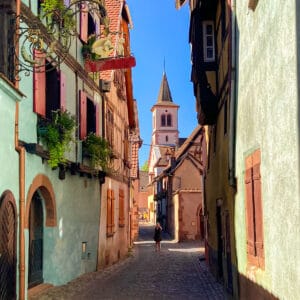
Entire villages and city areas in Europe are now perceived as Disney sceneries. Visitors don't understand that these places are not theme parks but actual places where locals live.
This includes communities such as Hallstatt in Austria, Riquewihr in France, Florence in Italy, and Dubrovnik in Croatia.
In some cases, the finger has to be pointed at the local administration as well, but also misbehaving tourists make it all worse.
Fake local culture is being propagated. Some people are getting rich thanks to a lie, and the locals that are not involved are the ones to suffer.