

What every American visitor gets wrong about Europe and what It's actually like, and much more.
I have added tips to this guide to help you navigate the continent like a pro. Collect more advanced Europe travel knowledge.

Jump to:
- Pay Toilet Access
- Smaller and Old Accommodations
- Different Food Options and Portions
- Free Refills and Tap Water
- Power Outlet & Plugs
- Restaurant Charges and Tipping
- Shops and Grocery Stores Closed on Weekends
- Car Rental across Countries
- Getting around in Cities
- Dress Code at Religious Buildings
- Open Drinking Culture
- Pre-booking Room Deposit
- 💬 Comments
Pay Toilet Access
Across several countries in Europe, it is common to pay for the restroom access.
You will encounter this mostly in Central Europe on highway restroom stops.
On highway stops, they have automatic machines in place that normally take coins and, in some instances, cards as well.
Most pay toilets cost about €0.50 to a €1, and they spit out a little voucher of the same value that you can use in the adjoining shop to buy coffee or other stuff.
Note that if you want to go wash your hands, you will have to pay to access the same area as well.
This is definitely something we have been complaining about in Europe, but at least in most cases the restrooms are clean. (Especially if you compare the paying ones with the free, filthy restrooms in Western Europe).
Pro Tip: Collect the vouchers that some people leave in the restroom and combined you can get a free coffee that way!


Smaller and Old Accommodations
En suite rooms with bathrooms can be at times rather small and stuffed with furniture in Europe.
Therefore, when you are booking a room or a holiday apartment, look out for the square meters in the description.
If it says, “Double Room”, it's most probably a smaller hotel room. If it says comfort or deluxe room, it's mostly a larger room.
Buildings and flats can be rather old too, especially in historic buildings in Vienna, Prague, Budapest, and other European capitals. These are poorly heated or cooled and don't offer the best experience.
Take extra care booking a room in the Netherlands (Amsterdam) and Belgium where narrow steep staircases are the norm in holiday rentals.

Different Food Options and Portions
This is not a universal law, but food portion sizes can be drastically different across the European continent.
The rule of thumb is, southern countries offer smaller portions and Central European countries have the largest food portions out there.
This can be important if you are not a big eater. I, personally, do not like big portions and I hate wasting food.
In Austria and Germany, this can be a problem, so we tend to share a meal, me and my wife. Children's portions are a possibility, but not every restaurant will let you order a children's portion there.


Free Refills and Tap Water
Free soda fills at a restaurant doesn't exist across the continent. You will only have this option in an all-inclusive or at a buffet.
Apart from that, tap water is not free in many countries at a restaurant, coffee places and bars. You pay for water almost as much as for a glass of soda.
Your options are most of the time, flat table water or sparkling water in all restaurants, coffee places and bars. The waiter will ask you, so be prepared!

That said, the exceptions are coffee houses in Austria, where they traditionally serve the coffee with a small glass of water at the side. If they didn't bring your black coffee with water, you can ask for one, as it should be included.
Know that when you walk around in the big cities, towns or villages, that in some places you will most likely encounter drinkable water fountains where you can top up your water bottle with quality water.
This is true for Venice, all Swiss, Austrian and German places. The water fountains in France rarely have drinking water.


Power Outlet & Plugs
Several types of outlet and plugs exist across the European continent, and therefore you will need a compatible travel adapter.
This includes (whole list of plugs and outlet types)
- UK, Ireland & Malta: Type G.
- Switzerland & Lichtenstein: Type J.
- Denmark: Type K.
- Italy: Type L.
- Rest of Europe: Type C, Type E, Type F.
Then you need to consider that the voltage output is set at 220 to 230 Volt in Europe, VS in North America where it runs at 110 to 120 Volt.
Most cell phone chargers and adapters in 2025 work on dual voltage levels, but I recommend checking your hair dryer and other appliances. The accepted voltage is mentioned on the plug or in the device booklet.


Restaurant Charges and Tipping
Tipping all over Europe is optional and tipping is considered an extra. When you tip in Europe, it's to express that you enjoyed and appreciated the service and food in a restaurant.
You do not have to tip, it's not a set law and anybody else telling you or manipulating you with words otherwise during the payment process, has learned to take advantage of unknown tourists.
We fell for that trap when we traveled to Bratislava in Slovakia and Budapest in Hungary, as we were caught off guard.
The way they word the question for tips is sketchy, and the best way to deal with this is to say that you will leave a tip in cash on the table.
When we tip in Europe, we round up, or we give 1–2 Euros, that's it. That's how we tip. Now, of course, if you really loved the food place, you are free to tip more.
If some other service is asking for tips, just say no. Tips are only for restaurants, point.
Note that in Italy they have an automatic surcharge added to all restaurant bills which is known as “coperto”. It covers things like bread and oil on the table.

Shops and Grocery Stores Closed on Weekends
This is a problem that you will face mostly in German-speaking countries, and that's Germany, Austria, Switzerland, and Liechtenstein.
Shops and grocery stores in these countries open usual yearly in the morning, sometimes 7 or 8 am, and they close by 6-7 pm.
On Saturdays, they close earlier, depending if it's a village or city store and on Sundays they are all shut. That means grocery shopping is not an option on Sundays in Germany.
All shops are closed on Sundays, including posts and banks. The roads often seem deserted, to be honest.
The result is that most people hurry to shop on Friday or on Monday, and this gets all amplified if a holiday is added to the week. You guessed it, all stores are closed on holidays as well.
If you need to get some basics at odd hours in these countries, head to a petrol pump shop. Things tend to be pricier, but they do carry basics there.
Just as a side note, if you have a medical emergency, head to the nearest district hospital.

Car Rental across Countries
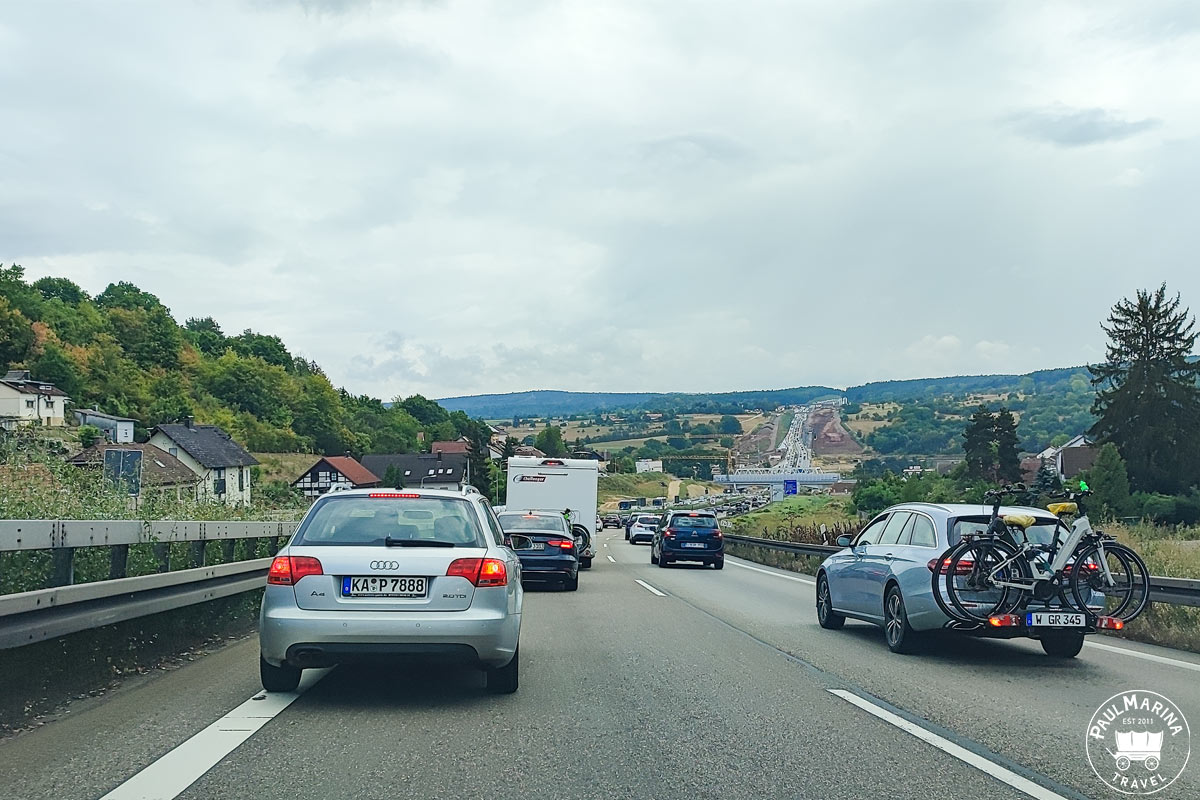
Because Europe consists of several small countries, it is not possible to rent a car in one country to drive across a set of other countries and to expect to return it in an entirely different countries.
You can't get a rental in Rome, drive across Austria, Germany to the Netherlands and expect to return it in Amsterdam.
Well, a handful of rental companies might say yes if you are ready to shell out a couple of thousand Euros. Because, they will have to send someone to Amsterdam from Rome to pick up the car.
Hopefully, this will be an option in the coming year, but for now, stick to renting a car in one country only.
Getting around in Cities
European cities are going more and more car-free, and most cities have some of the best public transport options in the world.
Therefore, you will need to get acquainted with the public transport options locally, and you will also be walking a lot.
Taxis are not as efficient in most cases, and Uber's are frequently not really a thing.
Besides, you certainly don't want to sit 30 minutes in traffic just because you would rather not walk 5 minutes or take the tram one to the next station.

Dress Code at Religious Buildings
Even if you are not religious, you will most definitely end up wanting to experience or see a church or synagogue from the inside.
Every country and belief has its own rules, and what applies to one region doesn't need to necessarily apply to the other neighboring one.
Take for example the Italian strict church attire code. They won't let you in if your shorts are too short, and that's men and women.
In France or Germany, they won't blink if you are wearing and entering a church with short, but a caretaker might polity point out to remove your hat from your head.
In synagogues, it's the same thing. In Budapest, they sell those semi transparent simple covers that you will have to put on if you want to enter the religious building.
Only Romanian Orthodox churches surprised us. They actually loosened the rules in the last decade or so, and now you can see plenty of people going in and out wearing shorts and sandals.

Open Drinking Culture
Drinking on the roads in Europe is part of the culture, and you will notice restaurants and bars offering seating options outdoors in the hotter months when people eat and drink.
In the winter months, you can purchase mulled wine at Christmas markets in Austria and Germany, and those are, of course, consumed outdoors.
Then you have those special places where they sell drinks to pedestrians. One that comes to my mind is the bridge wine spot in Würzburg, where people hang out at the bridge while drinking a glass of wine.
Alcoholic drinks are omni present in most European countries, and they are part of the culture.
Drinking laws for youngsters are also not as tight as in the US. As an instance of this, Germany allows 14-year-old Teenagers to drink in public if they are with a guardian.

Pre-booking Room Deposit
If a hotel, and with that, I mean a 4 or 5-star hotel, ever asks you for a booking deposit, it might just not be a scam.
It is common place in some hotels in some European countries to ask for a booking deposit if you are directly booking with them. It's a form of security that secures your hotel.
You have to know that booking directly can be at times much cheaper than booking via a provider such as Expedia or Booking.com.
Europeans still commonly cook rooms directly via email correspondence or on a call with the hotel reception.

Consider having someone proofread your column: "_hooter_ months", "where people hang out at the _bring_ while drinking”. Strangely, these were both in the "Open Drinking Culture" section. Was the writer partaking in a bit while writing that section? 😉
Ops, thanks, Dan, for pointing that out! Well, now you all know it's not written by a ChatGPT, but by a real person who can actually have a drink once in a while. It's “hotter months” and “bridge”. Fixed it now. 🙂